What spider control can and cannot do
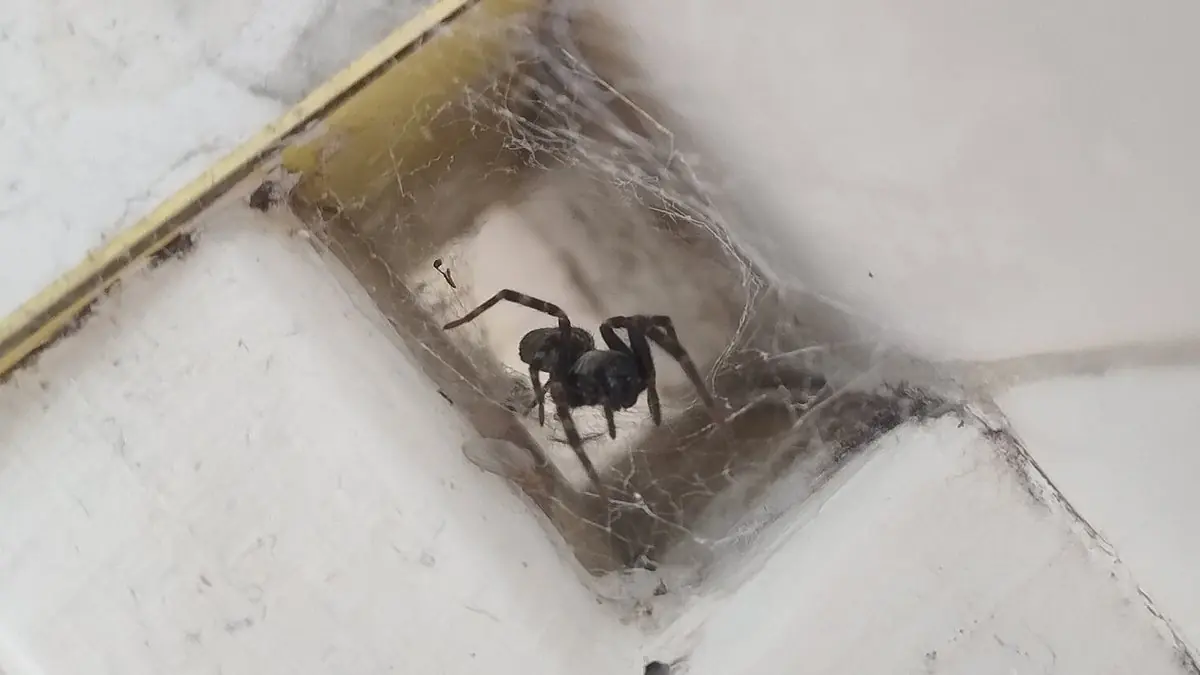
Most spiders around a Melbourne house are not dangerous and eat the insects you would rather not have. The ones worth acting on are redbacks near the places people put their hands and feet, and the black house spiders whose webs can crowd window frames and, in turn, feed the white-tailed spiders that wander indoors at night.
A professional treatment works best on web-building spiders, because they stay in one findable place. It is less reliable on hunters such as huntsmen and white-tails, which roam and have no web to treat. We tell you that up front, show you what we treat, and leave you with habits that keep numbers down. For identification photos of the common species, see our spider guide.
Which spider is it? The species we find in Melbourne homes
Identification decides the treatment. These are the spiders behind most calls, with what each one means for you.
Redback
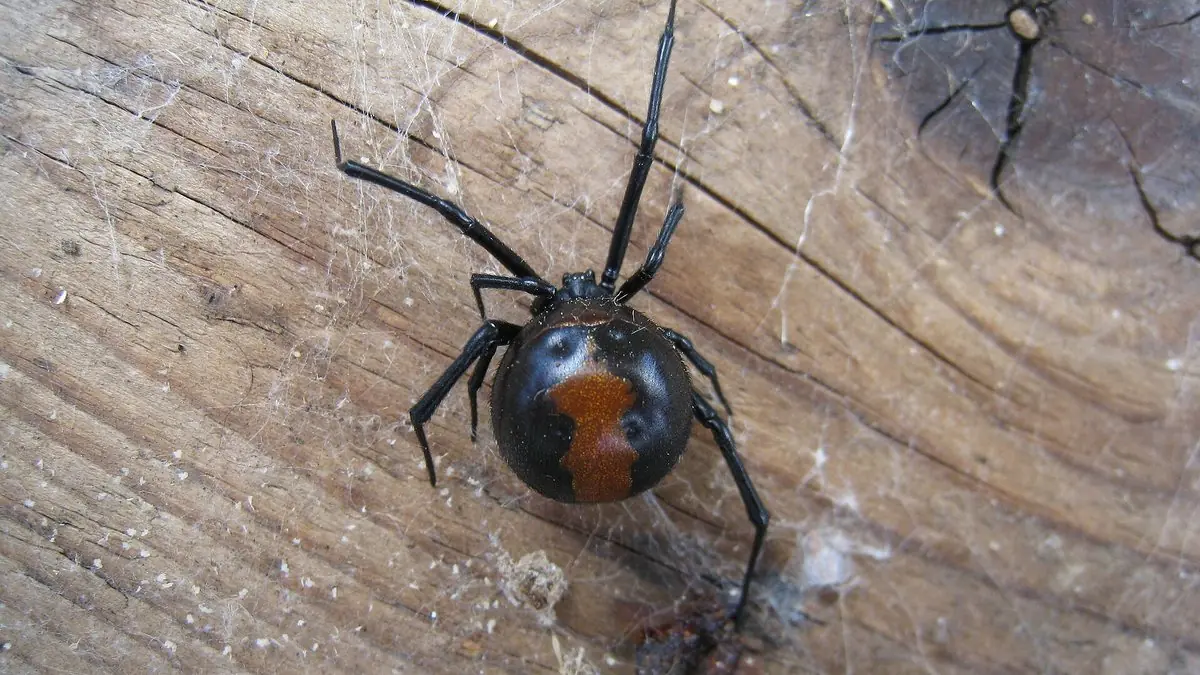
Female about 1 cm, black with an orange-red stripe on top and a red hourglass underneath. Messy tangle web in dry, sheltered spots: sheds, under outdoor furniture, cubby houses, steps and pool surrounds. The main medically significant spider in Victoria, so get medical advice after a bite. Where redbacks hide around the home.
Black house spider
Dark, velvety, up to about 2 cm. Lacy web with a funnel-shaped retreat in window frames, brickwork, fences and eaves, often beside an outdoor light. Timid; a bite can hurt but is not considered dangerous. More on black house spiders.
White-tailed spider
Cigar-shaped grey body with a pale tip, no web. Hunts other spiders at night, especially black house spiders, and turns up in bathrooms, laundries, bedding and towels. A study of 130 confirmed bites found them "very unlikely to cause necrotic ulcers" (Isbister and Gray, 2003). White-tails in the house.
Huntsman
Large, flat, grey-brown, legs spread like a crab, leg span up to about 15 cm. No web; slips under doors and through window gaps hunting insects. Shy and not considered dangerous. Getting a huntsman out.
Wolf spider
Robust brown-grey ground hunter in lawns and garden beds, sometimes in a burrow. Eyes shine green in torchlight. Cannot climb smooth surfaces, so it mostly wanders in at ground level under doors.
Daddy-long-legs
Tiny pale body, extremely long legs, thin tangled webs in ceiling corners, garages and behind doors. Not considered dangerous to people, and it eats redbacks. The venom story is a myth.
Garden orb-weaver
Stout brown spider with a large wheel web strung across paths and between shrubs at dusk, taken down near dawn. Found in most Melbourne backyards and reluctant to bite.
Melbourne trapdoor spider
Big, brown, with large fangs and an open burrow in garden soil (no lid). Males wander in autumn and early winter and can end up in houses and pools. Often mistaken for a funnel-web; health authorities advise leaving it alone.
Signs it is time to book a spider treatment
- Redback webs under outdoor furniture, play equipment, steps or the cubby house
- Round white or brown egg sacs, about 1 cm across, hanging in webs in the shed or garage
- Webs back around windows and eaves within days of brushing them down
- A funnel-shaped web in many window frames, especially beside outdoor lights
- White-tailed spiders found more than once in bathrooms, bedding or towels
- Clusters of tiny spiderlings on walls or ceilings
- Young children, a cat or guinea pig using areas where redbacks keep turning up
When are spiders worst in Melbourne?
There is no official spider season. This calendar is built from what Museums Victoria, the Australian Museum and published bite studies say about each species.
| Months | What is happening | What to do |
|---|---|---|
| Spring (September to November) | Young garden orb-weavers grow; the warm stretch begins in which almost all confirmed white-tail bites in one major study happened (September to April) | Check sheds, outdoor furniture and play equipment before summer use |
| Summer (December to February) | Redback bites are most frequent; black house spiders and orb-weavers reach adult size, so webs look bigger | Shake out shoes, wear gloves in the garden, keep webs down around doors and lights |
| Summer into autumn (December to May) | White-tailed spiders most often seen in and around houses, following their black house spider prey | Keep clothes and towels off the floor; clear black house spider webs |
| Autumn (March to May) | Orb-weavers lay eggs and spiderlings hatch and balloon away on the wind | Expect new webs; brush them down with a broom |
| Autumn and early winter (March to June) | Male Melbourne trapdoor spiders leave burrows looking for mates and turn up in houses and pools | Fit door seals; do not assume a spider in the pool is dead |
| Winter (June to August) | Redbacks rarely seen; young orb-weavers sit out the cold; wolf spider bites still occur (16% of confirmed bites in one study fell in late autumn or winter) | A good time to tidy sheds and seal gaps |
Why DIY spider spray often disappoints
Retail sprays do kill the spider they hit. The trouble is everything they miss.
Spraying it yourself
- Kills the spider you can see, not the next one blowing in on the wind
- Does not remove egg sacs: a female redback can make up to ten, each with roughly 250 eggs
- Needs repeating often, because new spiders keep arriving
- Sprayed across the garden, it can stir ground-dwelling spiders into wandering indoors
- Can harm bees, fish and other animals it reaches
What is worth trying first
- Removing webs and egg sacs with a stick or broom
- Draught strips under doors and flyscreens on windows and vents
- Tidying sheds and garages and packing away unused toys
- Shaking out shoes, clothes and towels
- Cutting shrubs back from doors and windows
What to try yourself before you call us
These steps draw on advice from the Victorian Department of Health, Better Health Channel, the Australian Museum and the Animal Poisons Helpline. For many homes they are enough.
- 1
Take down webs and egg sacs
Wearing gloves, push a stick into the back of a redback web and twist it so the spider, web and egg sacs wrap around it. Black house spider webs come down with a broom. Fresh webs later tell you where new spiders have arrived. Our guide to removing webs outside covers eaves and fences.
- 2
Close the ground-level gaps
Wandering spiders usually come in under doors, so fit draught strips. Flyscreens on windows and wall vents help stop the climbers and also keep out the insects spiders feed on.
- 3
Rethink outdoor lights
Lights draw insects, and black house spiders build where the food is. Where you can, keep light fittings off the wall beside doors and windows, and switching off lights you do not need is a sensible extra step, although no study has measured its effect.
- 4
Tidy the redback spots
Keep sheds and garages uncluttered, avoid stacking things tightly, and clear old tyres, wood piles, leaf litter and toys that sit unused. Turn outdoor chairs over now and then to check underneath.
- 5
Protect hands and feet
In one study, 28% of confirmed redback bites happened while putting on a shoe. Shake out shoes and clothes, wear gloves and shoes in the garden, and teach children to look but not touch.
- 6
Skip the remedies with no evidence
Lemon oil had no effect on spiders in a laboratory test. Peppermint oil and conkers have one lab test behind them and were never tried in real homes, and vinegar and ultrasonic plug-ins have no evidence at all. Skip open glue boards too: Victoria restricts glue traps, and insect glue traps must be guarded so no animal can touch the glue.
Done the basics and still finding redbacks or webs?
Tell us what you are seeing and where. We will tell you whether a treatment is worth it and give you a price that includes GST.
Thanks. Your request is in.
Your reference is . We usually respond within the hour during business hours. Need us sooner? Call 0485 511 588.
How our spider treatment works, step by step
Spiders are covered in all our home packages. The Complete package is the one that reaches outside, where most spiders live.
- 1
Inspect and identify
The technician walks the house and yard with you, identifies which spiders you have and finds where they are living: web retreats, egg sacs, gaps and voids. That decides where the product goes and where it would be wasted.
- 2
Target the web-builders where they live
Redbacks and female black house spiders rarely leave their webs, so the webs, retreats, cracks and crevices around them are treated directly with APVMA-registered products used strictly according to the label. That includes the undersides of outdoor furniture, steps and retaining walls.
- 3
Treat the outside perimeter
A residual spray goes on the eaves, window and door frames and fences, where black house spiders settle. Spiders that land or walk on treated surfaces later are affected while the residue lasts.
- 4
Dust the roof void and sub-floor
An insecticidal dust is puffed through the roof void and sub-floor, where it drifts into corners and clings to webbing that a liquid cannot reach. The Australian Museum notes these are places to check when white-tailed spiders are a problem.
- 5
Treat inside where needed
Inside, the technician treats cracks, crevices and skirting boards where spiders shelter, not open surfaces you touch every day.
- 6
Explain the after-care
Before leaving, the technician tells you what was used, how long to stay out of treated areas and when to brush webs down.
Honest limits: what no treatment can promise
No spray stops every spider walking in from the garden. Young spiders travel on silk threads carried by the wind, so new ones keep arriving, and the Australian Museum says keeping an area free of spiders for long is close to impossible. A treatment reduces numbers and makes your house a poor place to settle; it does not make it spider-free.
Hunters are the hardest. Huntsmen, white-tails and wolf spiders have no web to treat and may cross a treated surface only briefly. We treat the voids and gaps where they shelter, but we will not promise the same result we get on redbacks and black house spiders.
For a short time afterwards you may see more spiders, not fewer, because the treatment disturbs them from hiding. That is normal; our article on spiders after pest control explains what to expect and when to call us back.
How to prepare for your spider treatment
- Tell us beforehand about pregnancy, babies or young children, allergies or asthma, and every pet
- Put away food, toothbrushes, toys, pet bowls and clothes from rooms being treated
- Cover fish tanks, and move bird cages, reptiles and other pets out until surfaces are dry
- Outdoors, cover or move vegetable gardens, barbecues, fish ponds and the washing
- Make sure we can get into the shed, garage, sub-floor and roof void
- Close doors and windows for the outside treatment, and let neighbours know
- If you collect rainwater, ask us about diverting the inlet until after the next rain
After the treatment
Stay out of treated areas until surfaces are dry; we tell you how long that is for the products used on the day. Better Health Channel's general guide is four to six hours away from home, with the operator advising for the specific job. Keep pets out until surfaces are dry too.
- Open doors and windows for a few hours when you come back, and wipe benchtops and utensils before preparing food.
- Leave webs in place for a few days: the webbing itself carries the treatment. After that, brush them down so any fresh web shows a new arrival.
- Do not disturb the dust in the roof void or sub-floor.
- Ask the technician before hosing or washing treated outside walls and window frames, because the residue on the surface is what does the work.
The products we use are low risk to people and pets when used as the label directs, which is why the label rules on drying time, fish and pets matter.
How much does spider control cost in Melbourne?
Spiders are included in our home packages, so you pay a fixed package price rather than a separate spider fee. All prices include GST.
- Complete, unit or apartmentInside, outside perimeter, roof void and sub-floor; 6-month service warrantyfrom $219 inc. GST
- Complete, house up to 3 bedroomsOur most popular package for spiders outside and infrom $279 inc. GST
- Complete, house 4+ bedroomsEaves, windows, doors, fences, roof void and sub-floorfrom $339 inc. GST
- Essential, unit or apartmentSpiders inside the home only; 3-month service warrantyfrom $149 inc. GST
- Add-on: double storeyFor the extra height of upper eaves and windowsfrom $49 inc. GST
- Add-on: garage, shed or granny flatWorth adding where redbacks livefrom $39 inc. GST
Essential is also available for houses from $189. Total Protection, from $389, adds rodent bait stations and an annual termite inspection with a 12-month service warranty. See every package on our pricing page.
Our spider treatment service warranty
Every package comes with a written service warranty: 3 months for Essential, 6 months for Complete and 12 months for Total Protection. If the spiders we treated return in the areas we treated within that period, we come back and re-treat at no charge. Warranty conditions apply, and the technician explains them before starting.
The warranty sits on top of your rights under Australian Consumer Law, which require any service to be provided with due care and skill. It cannot change how spiders behave, which is why we are plain about the limits above.
Keeping spiders down between treatments
- Brush down new webs around windows, eaves and fences every few weeks in summer
- Keep shrubs and creepers trimmed clear of walls, doors and windows
- Store boxes off the floor and away from walls, with lids taped shut
- Keep car windows wound up
- Check outdoor furniture and play equipment before use
- Clear leaf litter and rubbish from the strip of ground beside the house
- Leave garden orb-weavers and trapdoor spiders alone where they are out of the way
- If redbacks return in treated areas within the warranty period, call us back to re-treat
Spider guides worth reading
Spider control in the suburbs we cover
We service homes across Melbourne's bayside and inner south-east. These pages cover each area's housing, common pests and prices.
Sources we used for this page
Species, seasons, first aid and control advice on this page come from these authorities. Product directions come from the registered labels of the products used.
- Spiders: pest control, Victorian Department of Health
- Spiders and Bites and stings first aid, Better Health Channel
- Pest control services, Better Health Channel
- Your eight-legged housemates, Museums Victoria
- Spiders in the house and garden, Australian Museum
- Latrodectism: a prospective cohort study of bites by formally identified redback spiders, Medical Journal of Australia
- White-tail spider bite: 130 definite bites, Medical Journal of Australia
Spider Control: common questions
How much does it cost to get rid of spiders?
With us, spiders are part of a home package rather than a separate charge. The Complete package, which treats eaves, windows, doors, fences, the roof void and sub-floor, starts from $219 including GST for a unit and $279 for a house up to 3 bedrooms. Inside-only treatment under Essential starts from $149. Every price is on our pricing page.
What gets rid of spiders quickly?
For a single spider, a broom or a jar and a piece of card is quickest; release it outside. For a redback, twist a stick into the back of the web to take the spider and its egg sacs together, wearing gloves. A surface spray kills the spider it hits but does nothing about the next one, so for repeat webs a targeted treatment of the places they build lasts longer.
What smell do spiders absolutely hate?
There is no good evidence for one. In a laboratory test, peppermint oil and chestnuts briefly repelled two of three spider species and lemon oil had no effect, and nothing was tested in real homes. What does work is physical: door seals, flyscreens, fewer outdoor lights near doors, and regular web removal. Our guide to keeping spiders out of the house covers the gaps that matter.
Are spiders a problem in Melbourne?
Mostly not. Most Melbourne spiders are not considered dangerous and eat household insects. The redback is the main medically significant spider in Victoria, and even its bite is very unlikely to be life-threatening, although it can be very painful. The dangerous Sydney funnel-web is not found in Victoria. Redbacks near children's play areas, sheds and outdoor furniture are the usual reason to act.
Is it worth spraying for spiders?
It is worth it for web-building spiders such as redbacks and black house spiders, which stay put and can be treated where they live. It is less worthwhile for wandering hunters like huntsmen, which may never touch a treated surface. Health authorities also advise against spraying the garden for ground-dwelling spiders, because it can send them indoors. If you are unsure, ask us for an assessment and price.
Why do I suddenly have so many spiders?
Usually it is the time of year rather than a sudden explosion. Garden orb-weavers and black house spiders reach adult size in summer, so webs look bigger; white-tails follow their prey in summer and autumn; and male trapdoor spiders wander in autumn looking for mates. Clusters of spiderlings mean eggs have just hatched nearby. Our Melbourne spider season guide explains each one.
How can I get a spider to leave my room?
Put a jar over it, slide a piece of card underneath and carry it outside, or sweep it out the door with a broom. Do not pick spiders up by hand. To stop the next one, fit a draught strip under the door, check window screens for gaps, and keep clothes and towels off the floor, where white-tailed spiders like to hide.