Ant control that starts at the nest
The ants on your bench are the small, visible part of a colony that lives somewhere else: under the path, in a wall cavity, at the base of a tree. Wiping or spraying the trail removes the ants you can see, and the nest simply sends more. Our ant control works the other way round. We find out which ant it is, where it lives and how it gets in, then treat the colony itself.
The method follows the Victorian Department of Health's guidance on ant control, which says treating the nest directly usually works better than treating the surfaces ants walk over. Every product we use is APVMA-registered and used strictly according to the label.
Which ant is it? Species we treat in Melbourne homes
The right bait and method depend on the species, so identification comes first. Our Melbourne ant identification guide has more photos and detail.
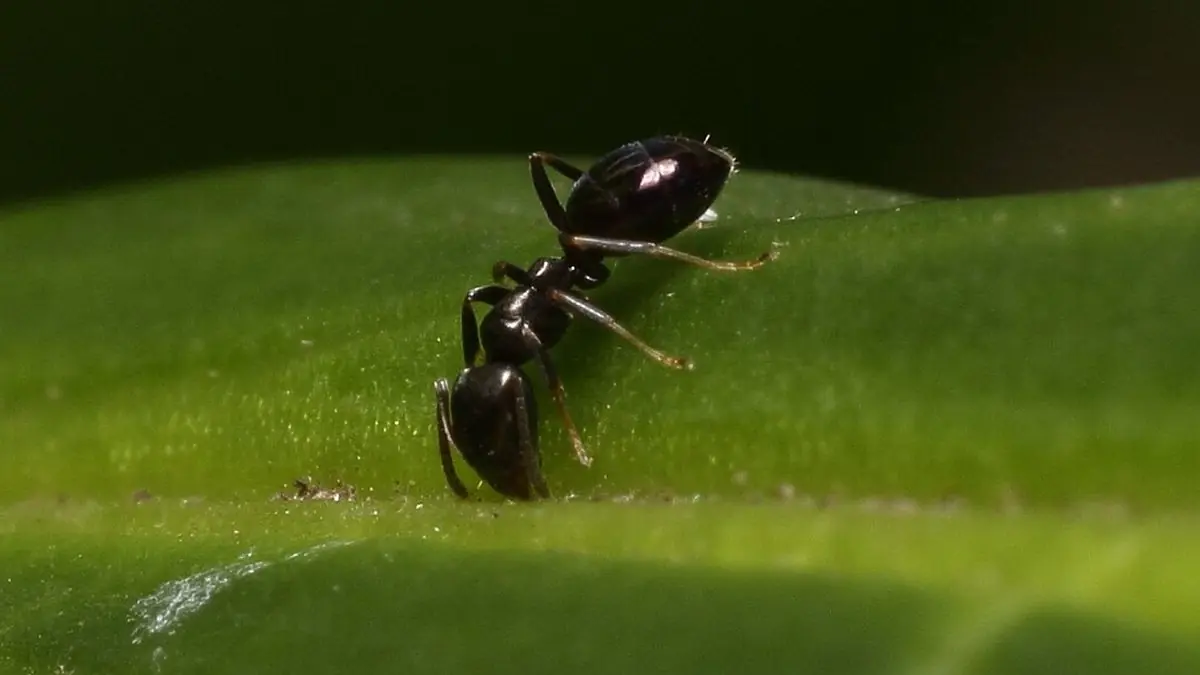
Black house ant
Glossy, deep black and 2.5 to 3 mm long, with a strong smell when crushed. It prefers sweet food and commonly nests in ceilings, wall cavities and subfloors as well as along path edges. It bites but does not sting.
White-footed house ant
Shiny black, 2.8 to 3.5 mm, and the other ant Victorians call a “black ant” (the pale feet need a magnifier). It is busiest at night in kitchens and bathrooms, nests in wall cavities, behind skirting boards and in appliances, and spreads by budding off new nests.
Argentine ant
Slender, brown and 1.5 to 3 mm, moving in slow, well-defined trails three or more ants wide, often up tree trunks. Nests have many queens and link up with each other. Australia's first verified record was in Melbourne in 1939. Read more about Argentine ants in Melbourne.
Banded sugar ant
Large (5 to 15 mm), with an orange-brown middle and a black head and rear. Mostly a night-time garden ant seen under outside lights in summer. It rarely nests indoors and has no sting, although big workers can bite.
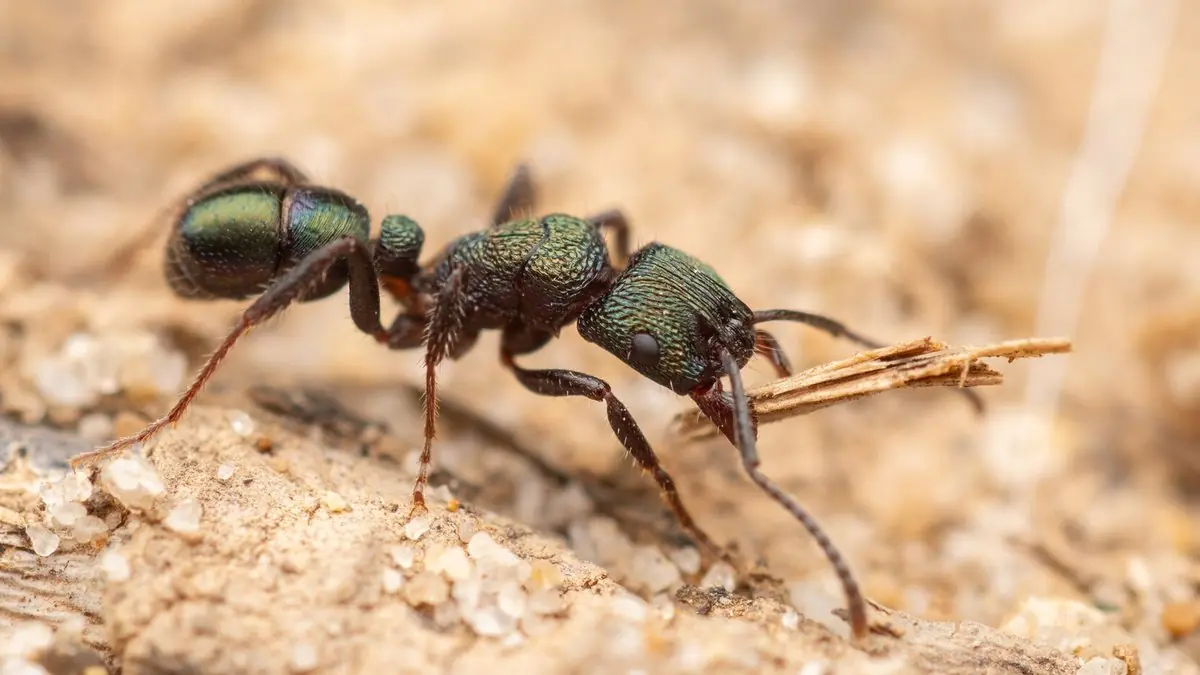
Green-head ant
5 to 7 mm with a metallic green to purple sheen, nesting in soil, lawns and at the base of shrubs. It stings, the sting is painful, and it can trigger an allergic reaction.
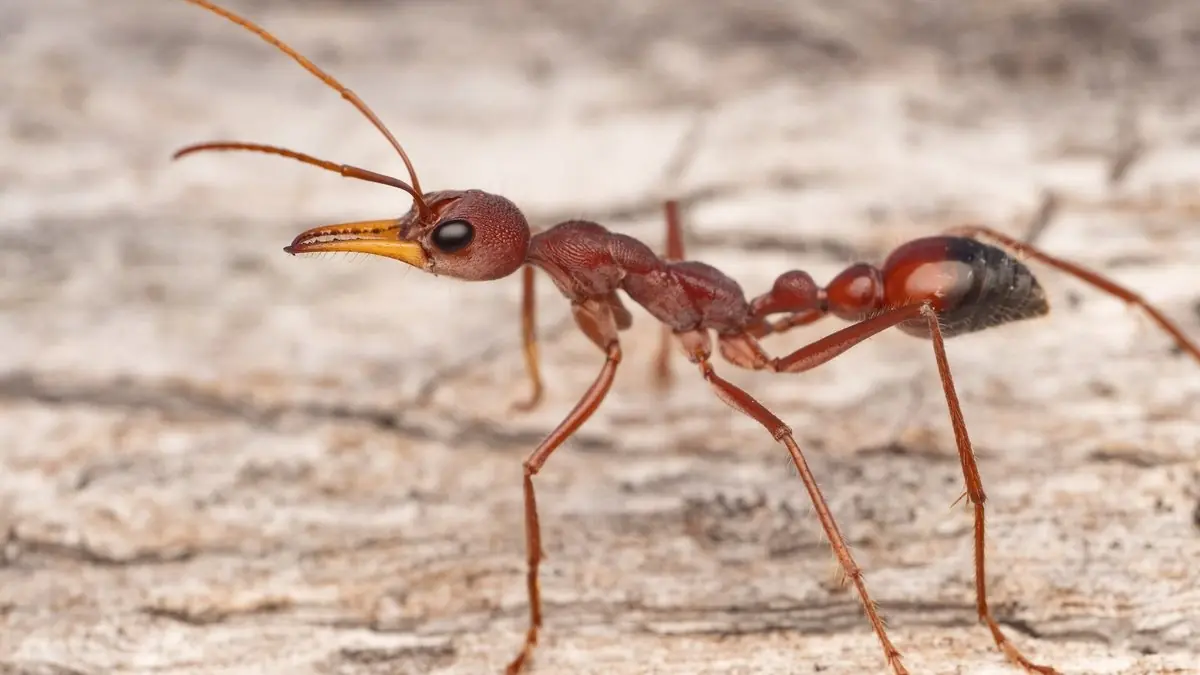
Bull ants and jack jumpers
Bull ants (8 to 40 mm, big eyes, long toothed jaws) live in bayside gardens and parks. Jack jumpers (about 10 to 15 mm, black with orange-yellow jaws) are mainly found in outer and bushland suburbs. Both sting. See bull ants and jack jumpers in the garden.
Signs you have an ant colony, not just a few scouts
A few wandering ants are usually scouts looking for food. These signs point to an established colony nearby or inside the house.
- A trail that comes back to the same spot after you wipe it, often along a skirting board, bench edge or pipe
- Ants coming out of a power point, light switch or gap in the skirting, which can mean a nest in the wall
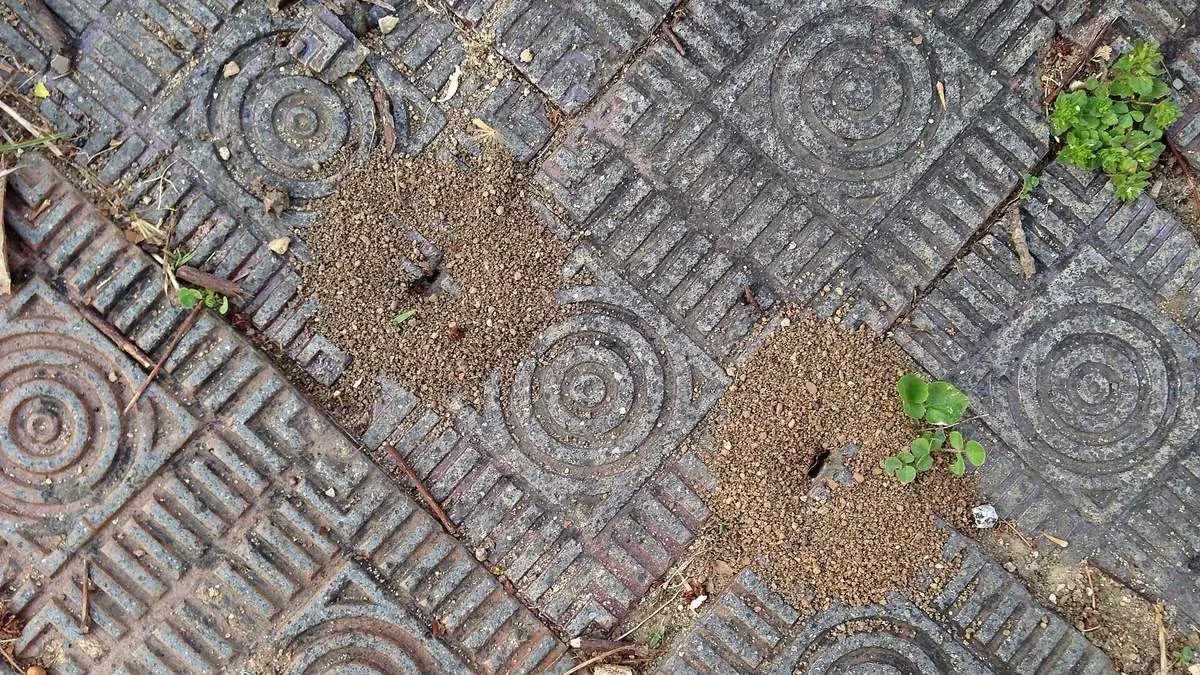
- Small mounds of fine soil or sand pushed up between pavers, along path edges or in brick joints
- Soil dumped around pot plants, between tiles or along the base of brickwork
- Busy trails up tree and shrub trunks, often to aphids or scale insects on the plant
- A column of ants carrying white eggs and pupae: a colony moving or budding off a new nest
- Winged ants indoors in spring or late summer, often after rain. Check they are not termites with our guide to flying ants or termites
- Ants in the kitchen or bathroom late at night, a habit of the white-footed house ant
When are ants worst in Melbourne?
Weather matters as much as the calendar: a wet week or a hot, dry spell can bring ants inside in any season.
| Season | Months | What ants are doing | What helps |
|---|---|---|---|
| Spring | September to November | Colonies wake up and grow, so kitchen trails are a familiar sign of warming weather. Winged ants fly, often after rain. | Deal with trails early, while numbers are still building. |
| Summer | December to February | Colonies stay busy in the warmth. Hot, dry spells send ants indoors looking for water, and winged ants fly again in late summer. | Fix dripping taps, seal food and put pet bowls in a water moat. |
| Autumn | March to May | Activity eases as it cools, but heavy rain floods nests and pushes ants inside for shelter. | Watch door frames and window sills after a downpour. |
| Winter | June to August | Most ants slow down and stay in the nest without truly hibernating. Argentine ants can still come inside in cold, wet weather. | A winter trail is worth identifying, as it may be Argentine ants. |
Why DIY ant control often fails
Most people try the supermarket first, and for a small trail that is reasonable. University guidance says cleaning, sealing gaps and a well-chosen bait handle many household ant problems. When they do not, it is usually for one of four reasons.
- The spray only reaches foragers. The ants you see are a small share of the colony. Surface spray kills them, the queens keep laying and numbers recover.
- Several Melbourne house ants have many queens or bud off new nests. Argentine ants have many queens in linked nests, and white-footed house ants start new nests by budding, so knocking out one nest rarely ends the problem.
- The bait does not suit the ant. Some ants want sugar, others protein or grease. If ants are not feeding on a fresh bait within minutes, it is probably the wrong bait or the wrong place.
- Spray and bait work against each other. Bait labels say not to spray on or near baits, and wiping or moving baits interrupts feeding.
Next door matters too: Argentine ants can move back in from a neighbouring property within two weeks of a spray. There is more on this in why ants keep coming back.
What is worth trying first
For the evidence behind home remedies, see home-made and natural ant killers.
Skip these
- Fly spray or surface spray on the trail: it kills the ants you see and leaves the nest
- Any spray near a bait you have already put down
- Indoor foggers and bug bombs, which are of limited use against ants
- Cinnamon, coffee grounds and chalk lines: no good evidence they control a colony
- Dusts sprinkled outdoors, where rain and foot traffic stop them working
Try these first
- Wipe the trail with soapy water or vinegar to remove the scent trail
- Find the gap they use and seal it with caulk (petroleum jelly will do for now)
- Store food in sealed containers and stand pet bowls in a shallow moat of water
- Put a registered slow-acting bait near the trail or entry point, matched to the ant, and leave it alone for 5 to 10 days
- Read the label and place bait where children and pets cannot reach it
When to call a professional
- A properly placed bait has had 10 days and you are seeing no fewer ants
- Ants are coming from walls, ceilings, power points or appliances. Our guide to ants in walls, ceilings and roof spaces explains the signs
- Trails run around the whole house, up trees and along fences, which often means Argentine ants
- You cannot find the nest or the way they are getting in
- Someone in the home has a sting allergy and bull ants, jack jumpers or green-head ants are nesting near paths or play areas
- Winged insects are coming out inside and you cannot tell ants from termites: book a termite inspection rather than guess
Get a price for your ant treatment
Tell us which ants you are seeing and where. We usually respond within the hour during business hours.
Thanks. Your request is in.
Your reference is . We usually respond within the hour during business hours. Need us sooner? Call 0485 511 588.
How our ant treatment works, step by step
Each visit is built on the steps the Victorian Department of Health sets out for ant control, adapted to your home.
- 1
Inspect inside and out
We follow the trails from where you see ants back to where they come from, checking kitchens, bathrooms, skirting boards, path edges, garden beds and tree bases for nests, entry points and what the ants are feeding on.
- 2
Identify the species
Sweet feeders such as black house ants and Argentine ants need a different bait from ants that prefer protein or grease. Getting this right decides whether the treatment works.
- 3
Treat the nest directly
Where we can reach a nest, we treat it directly. Dry spots where sprays are unsuitable, such as electrical boxes and (with Complete and Total Protection) roof voids, get a light dusting instead.
- 4
Bait the colony
Gel or liquid bait goes in small spots along active trails and near nests, in cracks and crevices away from food surfaces. Workers carry it home and share it with the rest of the colony, including the queens.
- 5
Treat the outside perimeter
With the Complete and Total Protection packages we apply a residual spray around the outside of the home: foundations, doors, windows, eaves and fences, plus trails at path edges and tree bases. Spray and bait placements are planned together, so the spray does not put ants off the bait.
- 6
Explain what happens next
Before we leave we tell you what was used and where, how long to stay out of treated areas and which bait spots to leave alone. Heavy infestations, Argentine ants especially, can need a second treatment: if treated ants return in treated areas within your warranty period, we come back and re-treat at no charge.
Where each package reaches
Ant control is part of our home pest treatments. Many of Melbourne's house ants nest outdoors, so when ants walk in from the garden the Complete package, with its outside perimeter, is usually the right fit. Essential suits units and ants that are only inside.
| What is included | Essential | Complete | Total Protection |
|---|---|---|---|
| Inspection and ant identification | Yes | Yes | Yes |
| Ant treatment inside the home | Yes | Yes | Yes |
| Gel baiting in kitchen, bathrooms and laundry | Yes | Yes | Yes |
| Outside perimeter: eaves, windows, doors, fences | No | Yes | Yes |
| Roof void and sub-floor dusting | No | Yes | Yes |
| Reminder when the next service is due | No | Yes | Yes |
| Rodent bait stations and annual termite inspection | No | No | Yes |
| Service warranty | 3 months | 6 months | 12 months |
Ant treatment prices
Fixed prices by property size, all including GST.
- Essential, unit or apartmentInside treatment and gel baiting. 3-month service warranty.from $149 inc. GST
- Essential, house up to 3 bedroomsInside treatment and gel baiting. 3-month service warranty.from $189 inc. GST
- Essential, house with 4 or more bedroomsInside treatment and gel baiting. 3-month service warranty.from $229 inc. GST
- Complete, unit or apartmentInside and outside perimeter, roof void and sub-floor. 6-month service warranty.from $219 inc. GST
- Complete, house up to 3 bedroomsOur most popular package. Inside and outside perimeter, roof void and sub-floor. 6-month service warranty.from $279 inc. GST
- Complete, house with 4 or more bedroomsInside and outside perimeter, roof void and sub-floor. 6-month service warranty.from $339 inc. GST
All prices include GST. A double-storey home adds $49 and a garage, shed or granny flat adds $39. Total Protection, from $389, adds rodent bait stations and an annual termite inspection. Compare every package on our pest control prices page.
Your service warranty
Every ant treatment comes with a written service warranty: 3 months with Essential, 6 months with Complete and 12 months with Total Protection. If treated ants return in treated areas within that period, we come back and re-treat at no charge. Warranty conditions apply and are set out in writing.
The warranty is an extra promise on top of your rights under the Australian Consumer Law, which already requires services to be provided with due care and skill. The warranty does not limit those rights. The ACCC sets out your consumer rights.
How long until the ants are gone?
Baits are slow on purpose. A bait that killed instantly would never reach the nest, so the ants need time to carry it home and share it. University guidance puts it at about 5 to 10 days before you see fewer ants, and several weeks for full control. One professional bait label says full control may take up to two months where numbers are very high or ants keep arriving from next door.
Expect more ants around the bait for the first few days. That is the bait working: foragers recruit nest-mates to a new food source. The warning sign is the opposite, ants walking past a fresh bait without feeding. There is more in how long ant bait takes to work.
Before the visit: preparation, children and pets
We use APVMA-registered products strictly according to the label, and the risk to people and pets is low when the label directions are followed. A little preparation helps.
- Tell us about pregnancy, babies or young children, asthma or allergies, and every pet in the home
- Leave the trails alone for a day before we arrive: we follow them to the nest
- Put away food, toys, toothbrushes, pet bowls and cooking utensils in the areas being treated
- Empty any cupboards that are to be treated
- Cover fish tanks, move bird cages and plan for pets to be elsewhere until surfaces are dry
- Outside, cover the vegetable garden, barbecue, fish pond and clothesline near treated areas, and let your neighbours know
- Ask us for the full name of each product: it helps with first aid if anyone becomes unwell
After the treatment
- Keep people and pets out of treated areas until surfaces are dry. Health department advice is generally four to six hours, and we tell you the time for your treatment
- When you come back, open doors and windows for a few hours and wipe benchtops and utensils before preparing food
- Do not wipe away or move bait spots: they sit in cracks and along trails, not on food surfaces
- Do not use fly spray, surface spray or other ant products near the baits
- Keep food sealed and crumbs cleaned up, so the bait is the easiest meal in the house
- If trails have not thinned out after two weeks, let us know
What ant control cannot do
We would rather tell you now than after you have paid.
- Keep a home ant-free for a fixed period. No treatment can, and no reliable source supports a figure
- Stop ants moving in from next door. Argentine ants can recolonise from a neighbouring property within two weeks
- Clear every ant from the garden. Most garden ants do useful work, and the realistic aim is to keep them out of the house and off the plants you value
- Make ants take bait while they have better food. A colony feeding on honeydew from aphids may ignore bait, so those insects may need controlling too
- Spray outside before heavy rain. At least one registered spray label forbids outdoor spraying when heavy rain is expected within 48 hours, so we may need to move your booking
- End the risk of stings. Jack jumpers wander well away from their nests, so treating nearby nests lowers the risk but cannot end it
How to keep ants out after treatment
- Seal gaps around pipes, skirting boards, window frames and door frames
- Store food sealed rather than in opened packets, and empty kitchen bins often
- Fix leaking taps and dripping pipes: ants come inside for water in dry spells
- Bring pet food inside or stand the bowl in a water moat
- Trim branches and shrubs so they do not touch the house, and keep mulch a little away from the walls
- Control aphids and scale on plants next to the house, and use sticky bands on tree trunks
- Pick up ripe fruit that has fallen near the house
- Store firewood away from the house and keep gutters clear
More ant guides
Ant control in your suburb
- BrightonAnt and general pest control for Brighton homes.
- ToorakAnt and general pest control for Toorak homes.
- St KildaAnt and general pest control for St Kilda flats and houses.
- CaulfieldAnt and general pest control for Caulfield homes.
- OakleighAnt and general pest control for Oakleigh homes.
- All areas we coverEvery suburb we service across Melbourne's bayside and south-east.
Sources we used
- Victorian Department of Health, Ants: pest control (species, nests and treatment procedure)
- Victorian Department of Health, Commercial pesticides: safety in the home (preparation and re-entry)
- University of California IPM, Ants pest note (baits, sprays and timing)
- Australian Museum, Ants as pests (weather and nesting)
- Suhr and others, Argentine ant study (Melbourne's 1939 record)
- ASCIA, Allergic reactions to bites and stings
- ASCIA, First aid plan for anaphylaxis (2026) (signs and first aid)
- Better Health Channel, Bites and stings: first aid
- Agriculture Victoria, Red imported fire ants (status in Victoria)
- ACCC, Your consumer rights (Australian Consumer Law)
Ant Control: common questions
How much does it cost to get rid of ants?
Our ant treatments start from $149 including GST for a unit treated inside, and from $279 including GST for a house of up to three bedrooms with the outside perimeter treated too. The price depends on property size and package, and every package includes a written service warranty. See what ant treatment costs in Melbourne for what changes the price.
What will kill ants permanently?
No treatment keeps ants away for good. What lasts longest is reaching the colony rather than the trail: identifying the species, treating the nest, baiting with a product the ants actually eat, sealing entry points and removing food and water. Even then, ants from a neighbouring yard can move in later, which is why our treatments carry a written service warranty of 3 to 12 months.
Is it worth calling pest control for ants?
Often not for a few scouts or a small trail: wiping the trail, sealing the gap and a matched bait can solve it. A professional treatment is worth it when a bait has not reduced the ants after about 10 days, when ants are nesting in walls, ceilings or power points, when trails run around the whole property, or when someone at home has a sting allergy and stinging ants nest close by.
Will ants come back after spraying?
Usually, if the spray only hit the ants you could see. Surface spray kills foragers, but the queens and most of the colony stay in the nest and keep producing workers. Argentine ants can also move back from next door within about two weeks. A treatment that targets the nest and uses a bait the colony shares lasts longer, and spraying near a bait works against it.
What's the cheapest way to get rid of ants?
Start with what costs nothing: find what the ants are after and remove it, wipe the trail with soapy water, and seal the gap they use. If they keep coming, a registered slow-acting ant bait from the supermarket or hardware store, matched to whether the ants want sugar or grease, is the next step. Read the label, keep bait away from children and pets, and give it 5 to 10 days.
Why do I suddenly have lots of ants?
Usually the weather or a new food source. Heavy rain floods nests and sends ants looking for shelter, and in hot, dry spells they come inside for water. In spring, colonies are growing and need more food. Once one scout finds something worth having, it lays a scent trail and recruits nest-mates, so numbers build quickly.
What household product kills ants immediately?
Soapy water or window cleaner wiped over a trail removes the ants it touches about as well as an insecticide spray does, and it clears their scent trail. Neither reaches the nest. For that you need a slow-acting bait, because a product that kills instantly is never carried back to the queens.