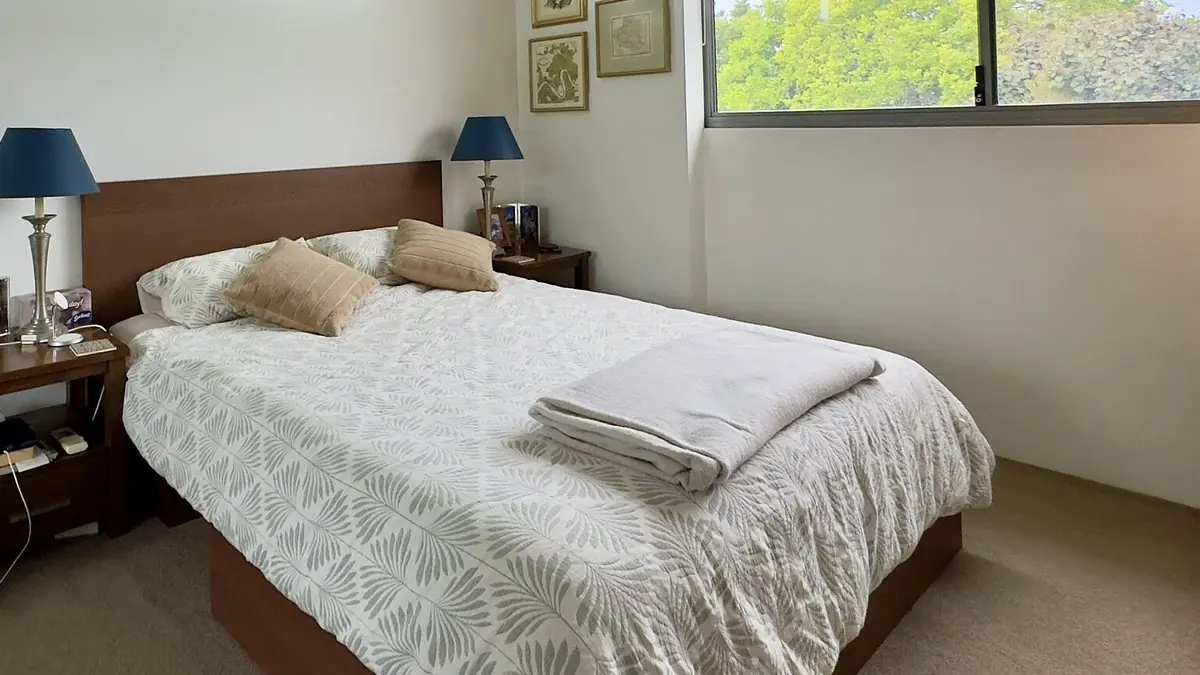
Bed bugs are a travel problem, not a cleanliness problem
Bed bugs turn up in spotless houses and in busy share flats alike. Luggage is the main way they move: people pick them up in hotels, hostels and other high-turnover accommodation and carry them home in suitcases, shoes and clothing. Second-hand mattresses and furniture are the other common route.
Once inside, they hide in the seams of the mattress and the joints of the bed and come out at night to feed. Supermarket sprays rarely fix the problem, because modern bed bugs resist the most common household insecticides and their eggs survive most sprays. That is why our bed bug treatment is two visits, not one. You can read more about the insect itself in our bed bug guide.
Which bed bug is it?
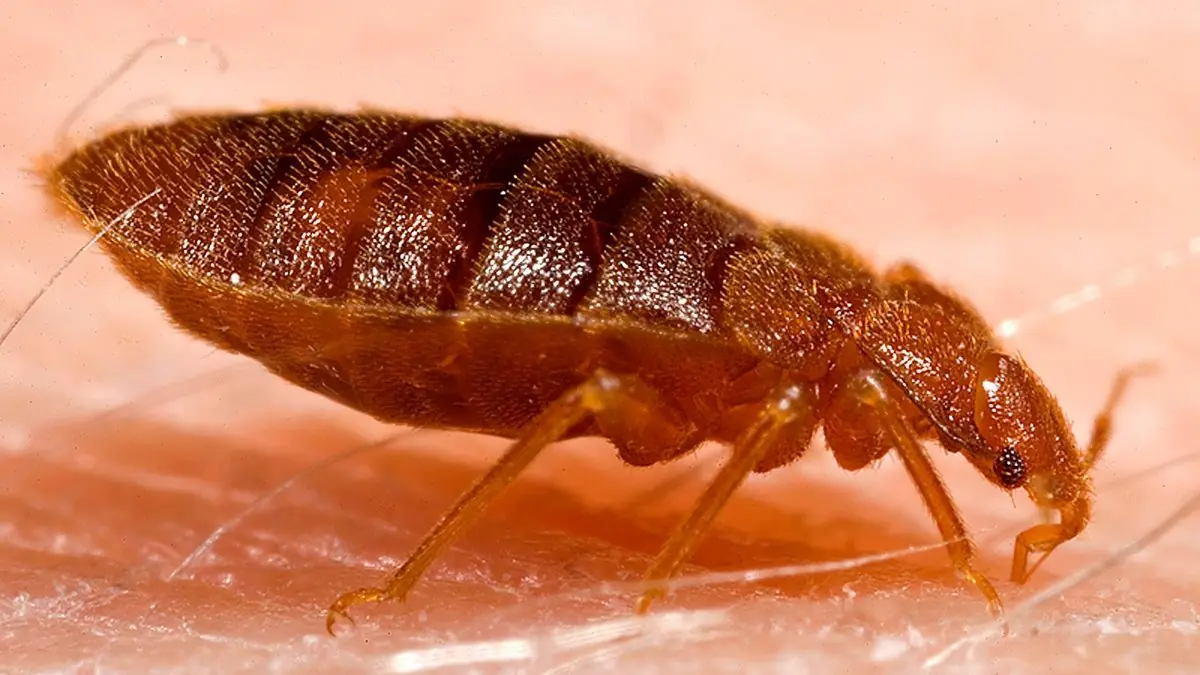
Bed bugs are wingless, flat and oval. Two species occur in Australia, and both were introduced. Use the sizes below with the pictures in our bed bug library entry.
Common bed bug (Cimex lectularius)
The species that predominates in southern Australia, including Melbourne. Unfed adults are reddish brown and about 5 mm long, the size and shape of an apple seed, swelling to almost 10 mm after a feed.
Tropical bed bug (Cimex hemipterus)
A close relative found mainly north of the New South Wales and Queensland border. In Melbourne, assume it is the common bed bug unless a specimen says otherwise.
Nymphs and eggs
Young bed bugs go through five stages, 1 to 4 mm long, cream and see-through at first and darker as they grow. Each stage needs a blood meal before it can moult. Eggs are cream, about 1 mm long and laid in dark crevices.
Things mistaken for bed bugs
Fleas, mites and mosquitoes all leave similar bites, and a bite alone cannot tell you what bit you. If there are no bugs, spots or skins in the bed, read about fleas in a house with no pets before booking a bed bug treatment.
Signs of bed bugs on sheets, mattresses and furniture
Bites are what most people notice first, but they are the weakest evidence. Look for these instead, starting at the mattress seams.
- Live bed bugs, which confirm an active infestation; adults show up well on white sheets and poorly on dark fabric
- Small dark spots in clusters along mattress seams, beading and folds (digested blood)
- Red blood spots or smears on sheets and pillowcases
- Empty cast skins left behind as nymphs moult
- Spotting on the bedhead, bed frame and bedside tables as the infestation spreads
- Signs along skirting boards, in cracks in plaster and in nearby furniture in older infestations
- A sickly sweet smell, usually only in a heavy infestation
- Itchy welts, often in lines on arms and shoulders, which can appear overnight or up to two weeks after the bite
Bed bugs through a Melbourne year
Bed bugs live indoors, so there is no season when they disappear. Temperature changes how fast they breed: their eggs take about 21 days to hatch at 18 °C, 12 days at 22 °C and 5 days at 27 °C.
| Months | What is happening | What to do |
|---|---|---|
| Summer (December to February) | Warm bedrooms mean the fastest breeding of the year, and holiday travel brings luggage home from busy accommodation. | Inspect suitcases and keep them out of the bedroom after a trip; hot-wash or hot-dry travel clothes. |
| Autumn (March to May) | Rooms cool and breeding slows, but a few bugs brought home in summer keep building numbers. | Check mattress seams and the bedhead if new bites appear. |
| Winter (June to August) | Breeding is slow, but bed bugs can live for months without feeding, longer in cool rooms. An empty spare room does not starve them out. | Treat a known problem now rather than waiting for spring. |
| Spring (September to November) | Rooms warm up and egg hatching speeds up again. | Deal with any low-level infestation before summer. |
Why DIY bed bug treatment often fails
Some home measures genuinely help and are worth doing while you wait for a technician. Others make the problem harder to treat.
What tends to make it worse
- Supermarket sprays: most contain synthetic pyrethroids, which modern bed bugs largely resist and which scatter them
- Bug bombs and foggers: they do not reach the hiding places and can spread bugs through the home
- Dragging the mattress or furniture into another room, which spreads bed bugs as you go
- Leaving a mattress in black plastic in the sun; big items do not heat right through
- Throwing out the bed while bugs remain in the frame, skirting and carpet edges
What is worth doing first
- Wash bedding and clothes at 60 °C, which kills bed bugs at every life stage
- Tumble dry dry items on hot for at least 30 minutes; wet items stay in until fully dry
- Vacuum mattress seams and the bed frame, then seal and bin the vacuum bag straight away
- Freeze small items; a household freezer needs about 10 hours and dense items can take days
- Fit a bed-bug-proof mattress encasement, and leave it on for well over six months
Found spots on the mattress?
Tell us your suburb and what you have seen. We usually respond within the hour during business hours and will explain how to prepare before the first visit.
Thanks. Your request is in.
Your reference is . We usually respond within the hour during business hours. Need us sooner? Call 0485 511 588.
How our bed bug treatment works, step by step
We use only APVMA-registered products permitted for bed bugs, strictly according to the label.
- 1
Inspection before anything moves
Leave the room as it is until we arrive. The technician checks mattress seams and beading, the bed frame and bedhead, bedside furniture, skirting boards and the adjoining rooms to confirm bed bugs and map how far they have spread.
- 2
Preparation
The technician explains what to prepare (see below). Most of it is bagging, hot washing and emptying furniture so the treatment can reach the cracks.
- 3
First treatment
A residual spray goes precisely into mattress beading where the label allows, bed frame joints, cracks and crevices, and along skirting boards. A dust goes into voids and gaps a spray cannot reach. We never apply pesticide to sheets, pillows or other bedding.
- 4
Stay out until dry
People and pets leave the treated rooms during the treatment and stay out until surfaces are dry. Fish tanks are covered or moved. We tell you how long that is for the product used.
- 5
Second visit about 14 days later
Most products do not kill eggs, so young bugs keep hatching after the first visit. We return about 14 days later to inspect again and treat the nymphs that have hatched since. Eggs hatch more slowly in a cool room (about 21 days at 18 °C), which is one reason some jobs need a further visit.
- 6
More visits only if needed
A heavy or long-standing infestation, or one spread through several rooms, can need a further visit. If so, we tell you why and what it costs before booking it.
How to prepare, and what to do afterwards
Good preparation decides whether treatment works. These steps follow the national Industry Code of Best Practice for Bed Bug Management and the Victorian Department of Health bed bug advice.
- Before the inspection: move nothing out of the bedroom.
- After the inspection: bag and seal sheets, curtains and clothing from the room, wash them at 60 °C and/or tumble dry on hot for at least 30 minutes, then keep them sealed in clean bags outside the room until the job is finished.
- Empty wardrobes, drawers and bedside tables, and clear clutter from the floor and under the bed.
- Vacuum mattress seams, the bed frame and carpet edges, then seal and bin the vacuum bag. Skip stiff brushes, which can spread eggs.
Afterwards, do not vacuum floors or upholstered furniture for at least 12 to 14 days after the final treatment, so the residual product can keep working on bugs that walk over it. Our guide to preparing for pest control and what to do afterwards covers every kind of treatment.
How much does bed bug treatment cost in Melbourne?
One price covers both visits. Bed bugs are not part of our general home packages, because they need their own inspection and follow-up.
- Bed bug treatment, 2 visitsInspection, first treatment, a second visit about 14 days later and advice on preparing the roomfrom $349 inc. GST
All prices include GST. Larger or harder jobs are confirmed with you before we start. See every price on our pricing page.
The honest limits of bed bug treatment
Some limits are worth knowing up front. One visit is unlikely to clear an infestation, which is why two are included, and a heavy or long-standing one can need more. Resistance has been reported to nearly every chemical group, so careful placement and the follow-up matter as much as the product.
New bites can show up for up to two weeks after the last feed, because reactions are often delayed. And treatment does not stop new bed bugs arriving in a suitcase after the next trip, or moving in from a neighbouring unit that has not been treated.
Bed bugs in rentals, apartments and short-stay properties
In flats and other multi-unit buildings, bed bugs can travel between adjoining units. If you live in an apartment, tell the owners corporation, because treating one unit while the neighbour stays infested rarely lasts. If a neighbouring infestation is not dealt with, the council's environmental health officer can help. Our article on pest control in Victorian apartments and strata explains who handles what.
Renters should tell the rental provider as soon as they see signs. Consumer Affairs Victoria says there is no single rule about who pays: it depends on whether the renter's conduct contributed, or whether the pests were already there or got in through a problem with the property (Consumer Affairs Victoria guidance on pests in rentals). Check your rental agreement first; an inspection report from a licensed technician helps either side. If you cannot agree, Rental Dispute Resolution Victoria, a free VCAT service, is the usual first stop.
Short-stay hosts and accommodation operators can ask about our commercial pest programs.
How to keep bed bugs out after treatment
- In hotels and short-stays, keep luggage in the middle of the room or on a checked table until you have looked at the mattress seams and where the bed meets the wall
- Ask for another room if you see live bugs or old blood spotting
- After a trip, unpack outside the bedroom and hot-wash or hot-dry everything you took
- Avoid second-hand mattresses and upholstered furniture unless you know they are free of bed bugs
- Keep a bed-bug-proof encasement on the mattress
- Check mattress seams regularly if you travel often or host guests
Bed bug treatment in our main suburbs
- Pest control St KildaMostly flats and apartments, where bed bugs can move between units.
- Pest control CaulfieldBed bug and general pest treatment across Caulfield.
- Pest control BrightonBed bug and general pest treatment across Brighton.
- Pest control ToorakBed bug and general pest treatment across Toorak.
- Pest control OakleighBed bug and general pest treatment across Oakleigh.
Related bed bug guides
Bed Bug Treatment: common questions
What kills bed bugs immediately?
Heat. Bed bugs die at once at 60 °C or more, so direct steam kills them on contact, eggs included, and a 60 °C wash kills bed bugs at every life stage in bedding and clothes. A hot dryer cycle of at least 30 minutes also works on dry items. The catch is reach: heat only works where you apply it, and it leaves nothing behind for bugs hiding in the bed frame and skirting. That is why professional treatment adds a residual product and a second visit.
What if I slept in a bed with bed bugs?
Bed bugs are not known to spread disease, so the main job is not bringing them home. Keep your luggage out of the bedroom, unpack outside it, and hot-wash or hot-dry everything you took. Watch for bites, which can take up to two weeks to show, and check your own mattress seams over the following weeks. If you find spots, skins or live bugs, ask us for a bed bug quote.
Do bed bugs go away if you shower?
No. Bed bugs do not live on your skin. They feed for up to about 10 minutes, mostly at night, then go back to hiding places in and around the bed. A shower may ease the itching, but it does nothing to the bugs in the mattress seams, bed frame or skirting.
How do you get rid of bed bugs in a bed permanently?
No treatment makes a bed immune for good, because new bed bugs can arrive in luggage at any time. What clears the current infestation is a careful inspection, a residual treatment of the bed frame, seams and nearby cracks, hot washing of bedding, and a follow-up visit to catch hatching eggs. A bed-bug-proof encasement on the mattress, left on for well over six months, then helps protect it.
Do hardware-store bed bug sprays work?
Usually not well. Most household insecticides contain synthetic pyrethroids, and resistance to them is widespread in modern bed bugs. They also do not kill eggs and can scatter bugs into new hiding places. If you want to act before a technician arrives, hot washing, vacuuming seams and an encasement are better uses of your money.
Should I throw out my mattress?
Usually there is no need. Bed bugs also live in the bed frame, bedhead, skirting boards and nearby furniture, so a new mattress in an untreated room soon becomes infested too. Dragging the old one through the house can spread bugs on the way out. Most mattresses can be treated where the product label allows, then protected with an encasement.
How long does it take to get rid of bed bugs?
Our program runs over about two weeks: the first treatment, then a second visit about 14 days later, timed to catch young bugs hatching from eggs that survived the first treatment. Bites may still appear for up to two weeks after the last feed because reactions are delayed. A heavy infestation can need a further visit, and we tell you before booking one.