The short answer
The common spiders in Melbourne homes are black house spiders, daddy-long-legs, white-tailed spiders, huntsmen and cupboard spiders. Outside you will meet redbacks, garden orb-weavers, wolf, jumping and Melbourne trapdoor spiders. The female redback is the main medically significant spider in Victoria. The deadly Sydney funnel-web does not live in Victoria, but treat any big black spider bite as an emergency: pressure bandage, keep still, call 000.
Key points
- The female redback is the main medically significant spider in Victoria; bites from most other local spiders cause local pain that usually settles.
- The Sydney funnel-web is not found in Victoria. The big dark spider in a Melbourne garden is usually a trapdoor or black house spider.
- In Museums Victoria material, the brown house spider means the cupboard spider (Steatoda), a redback lookalike with no red mark.
- The web tells you a lot: lacy funnel, messy tangle, wheel or no web at all each point to different spiders.
- Museums Victoria's Ask us identification service is limited until March 2027, so a clear photo and a look at the web are your best first clues.
You have found a spider on the wall, in the shed or across the path and want to know if it matters. Most common spiders in Melbourne are timid insect eaters; the female redback is the one that deserves real respect. Here is how to name it, judge the risk and decide what to do.
Spiders you will find inside Melbourne homes
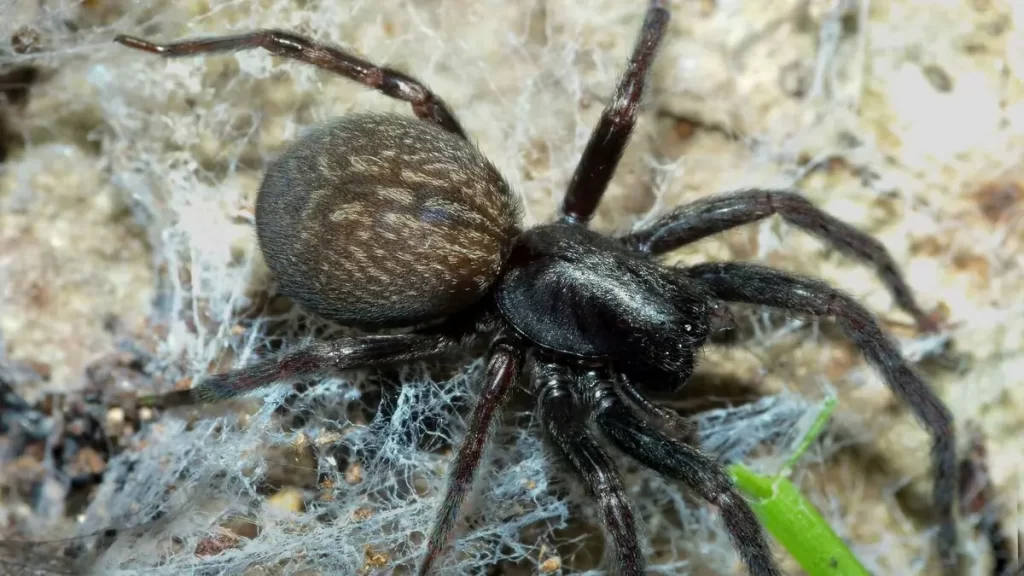
Spiders come indoors to hunt, to find shelter for a web or to look for a mate, says Museums Victoria. Black house spider (Badumna insignis): dark and velvety, up to about 2 cm, living in a lacy, funnel-shaped web in window frames, brickwork and under eaves. A bite can hurt but is not considered dangerous. More in our black house spider guide.
Daddy-long-legs (Pholcus phalangioides). A pale body of about 1 cm on very long, thin legs, in loose tangles in ceiling corners and behind doors. The deadly-venom story is a myth; at most it gives a brief, mild sting, and it eats redbacks.
White-tailed spider (Lampona cylindrata, and the similar L. murina). Cigar-shaped, dark grey with a white tip on the abdomen, about 12 to 18 mm. It roams at night without a web, hunting other spiders. Most bites happen when one is trapped against skin in bedding, clothes or a towel.
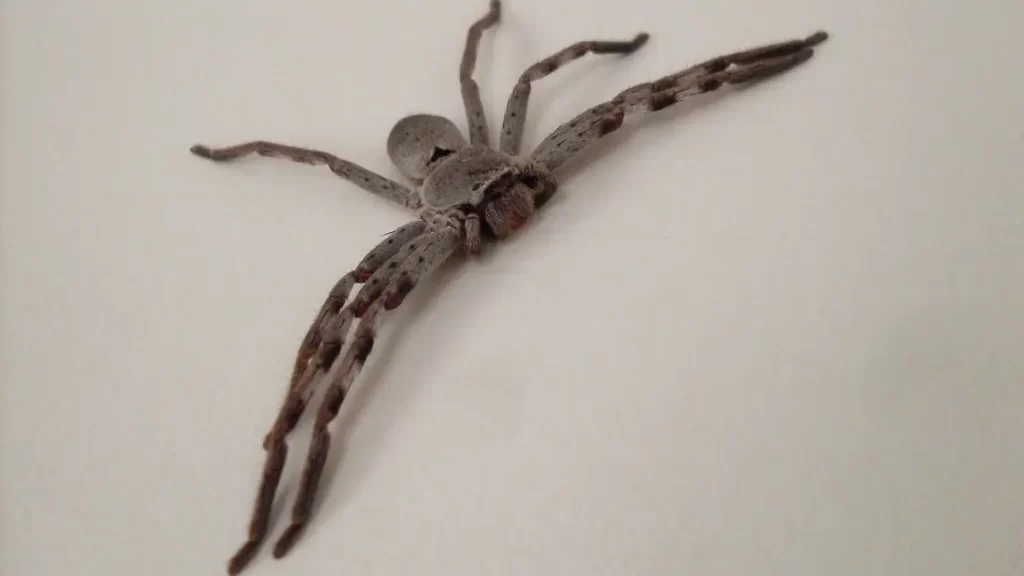
Huntsman (family Sparassidae). Large, flat, grey to brown, with legs splayed sideways like a crab and a leg span of up to about 15 cm. The badge and social huntsmen are often seen in Victoria. Shy and not considered dangerous; see what to do about a huntsman in the house.
Cupboard spider (Steatoda species). Museums Victoria calls it the brown house spider (the Australian Museum uses that name for a relative of the black house spider). It is brown to black, up to 1 cm, with a round abdomen and usually a white crescent but no red. It lives in tangled webs in cupboards and under furniture, is often mistaken for a redback, and its bite is treated the same way.
Spiders of the garden, fences and sheds
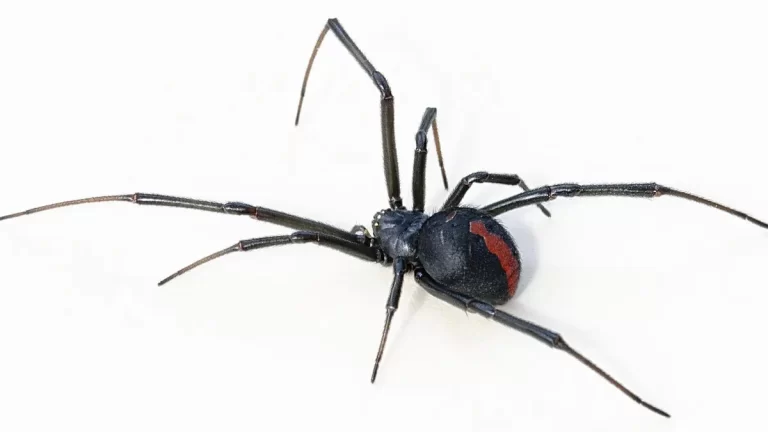
Redback (Latrodectus hasselti). The female is about 1 cm, black with an orange-red stripe on top. She sits in a messy, sticky web in dry, sheltered spots: sheds, under outdoor furniture, in cubby houses and in long-unused shoes. Redbacks rarely leave the web; bites are most common in summer and the spiders are rarely seen in winter. See our redback guide.
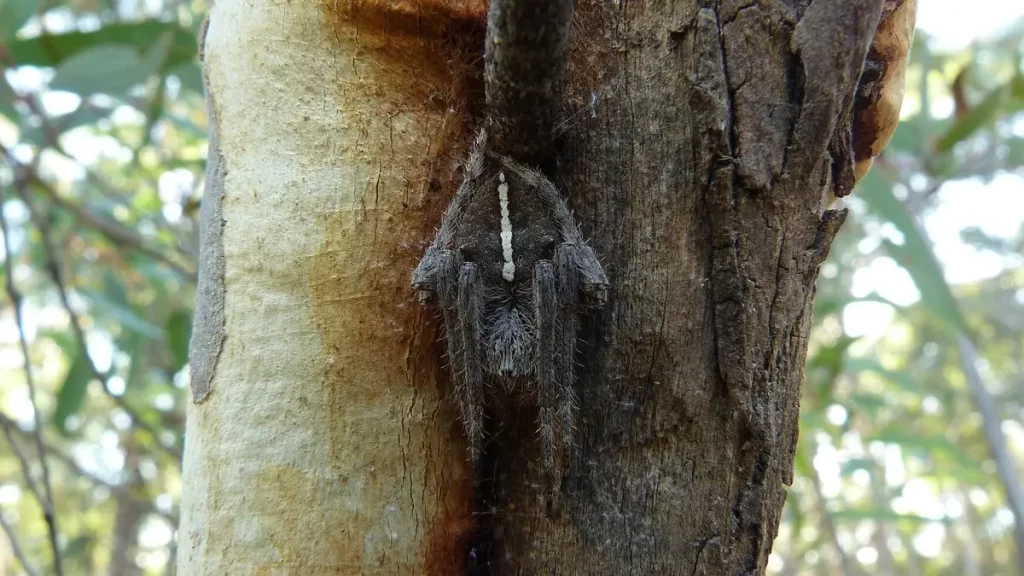
Garden orb-weaver (Hortophora biapicata, formerly Eriophora). Museums Victoria says it lives in most Melbourne backyards. It spins a large wheel web across gaps at dusk, takes it down around dawn and hides on bark or leaves by day (pictured at the top). It is reluctant to bite.
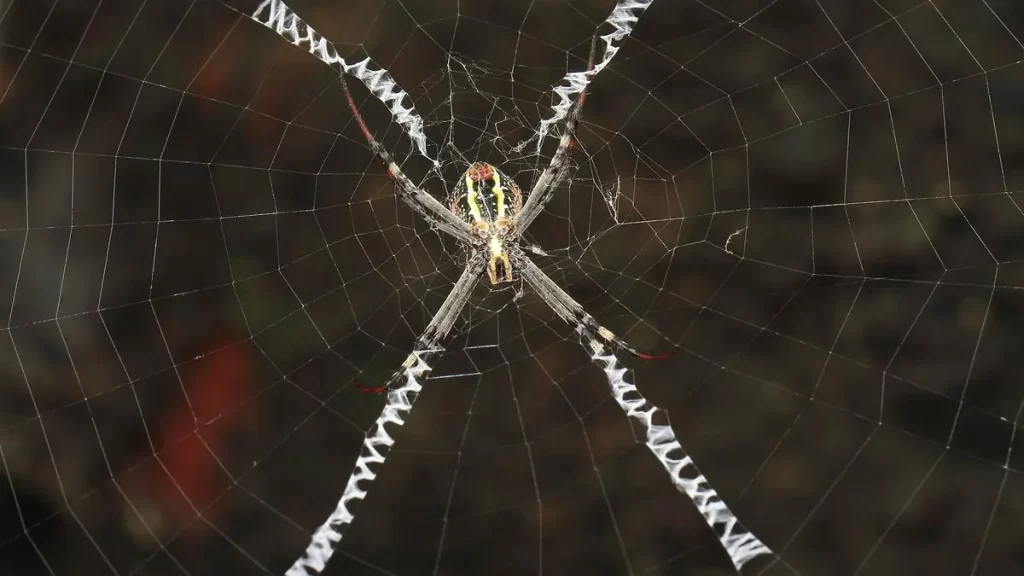
St Andrew’s Cross spider (Argiope keyserlingi). A banded silver, yellow and black spider that sits on a wheel web with a zig-zag white cross. Its range includes Victoria.
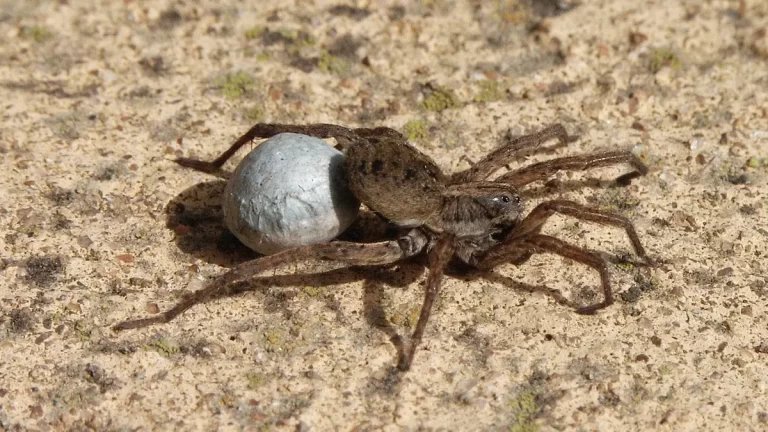
Wolf spiders (family Lycosidae; the garden wolf spider is Tasmanicosa godeffroyi). Drab grey-brown ground hunters in lawns and garden beds, small to large, whose eyes shine green in torchlight. Bites usually cause minor pain.
Jumping spiders (family Salticidae). Small, often colourful daytime hunters with two big forward-facing eyes, seen on fences and house walls. Timid and rarely bite.
Big black spiders: what they usually are
The Sydney funnel-web is not found in Victoria. Funnel-webs are not part of the spider fauna of Melbourne’s inner, bayside and middle suburbs; the less dangerous Victorian funnel-web lives in the Dandenong Ranges on the city’s outer-eastern edge and further east. The big dark spider in a Melbourne garden or pool is usually one of these.
| Spider | Where you find it | How to tell | Risk |
|---|---|---|---|
| Black house spider | Lacy funnel web on windows, walls, fences | Dark, velvety, up to about 2 cm | Painful bite possible; not dangerous |
| Melbourne trapdoor spider | Open burrow in soil (no door); males wander into houses and pools in autumn and early winter | Brown, mottled rib-like pattern, big fangs, up to 35 mm | Deep, painful bite; venom not known to cause medical problems |
| Mouse spider (Missulena) | Burrow in the ground; males wander by day | Shiny black, bulbous head and big jaws | Serious cases rare, but give funnel-web first aid |
| Victorian funnel-web (Hadronyche modesta) | Burrows in the Dandenong Ranges and further east | Shiny black, up to 3 cm | General symptoms only; no deaths or serious illness recorded |
Big black spiders are hard to tell apart; read our guide to funnel-webs in Melbourne for more.
Which Melbourne spiders are actually dangerous?
The Royal Children’s Hospital names the female redback as the main medically significant spider in Victoria. A redback bite may not hurt at first, then pain builds over minutes to hours; it is very unlikely to be life-threatening, and there have been no confirmed redback deaths since antivenom arrived in 1956. Babies, young children, older people and people with heart conditions face a greater risk of a severe reaction.
For redback and other ordinary spider bites, Better Health Channel says to wash with soap and water and apply a cold pack for 15 minutes, reapplying if pain continues. Do not bandage: pressure makes the pain worse. Get medical advice for a suspected redback bite, go to an emergency department if pain is severe or spreading or other symptoms appear, and have babies and young children checked.
A funnel-web, mouse spider or any big black spider bite is different: call 000, keep the person still and apply a pressure bandage. Follow the full steps on the Better Health Channel first aid page.
Identifying a spider by its web
| What you see | Likely spider |
|---|---|
| Lacy sheet with a funnel retreat in a window frame or crack | Black house spider |
| Messy, sticky tangle in a dry, sheltered spot | Redback or cupboard spider |
| Thin, loose tangle in a ceiling corner | Daddy-long-legs |
| Large wheel across a path, gone by morning | Garden orb-weaver |
| Wheel web with a white zig-zag cross | St Andrew’s Cross spider or a relative |
| Hole in the soil, no web | Usually a trapdoor or wolf spider (mouse spiders also burrow); keep hands out |
| No web at all, spider on the move | Huntsman, white-tail, wolf or jumping spider |
Still not sure? Museums Victoria’s Ask us identification service has paused identification enquiries until 1 March 2027, so for now a sharp photo, this guide and the web are your best clues.
What to do when you find one
- Look, do not touch. Photograph it from a safe distance and compare it with this guide.
- Leave the useful ones. Orb-weavers, jumping spiders, huntsmen and daddy-long-legs are not considered dangerous and eat insects. Move an orb-weaver that keeps building across a busy path.
- Move wanderers outside. Trap a huntsman or white-tail under a jar, slide card underneath and release it outdoors.
- Deal with redbacks carefully. Wear gloves and use a stick, never bare hands. Twist the stick into the back of the web so the spider and egg sacs wrap around it.
- Brush down house spider webs. A broom on windows and eaves also removes the main food of white-tailed spiders.
- Shake out shoes, clothes and towels. In a Medical Journal of Australia study of 68 confirmed redback bites, 28% happened while putting on a shoe.
- Close the gaps. Fit draught strips to doors and flyscreens to windows and vents, and keep shrubs trimmed back from the house.
The Victorian Department of Health advises against spraying the garden or lawn for ground spiders, because it can make them wander, including indoors. New spiderlings keep arriving on the wind, so no spray keeps a home spider-free.
When a spider problem needs a professional
- Redbacks keep reappearing around play areas, outdoor furniture or the shed.
- Black house spider webs return across windows and eaves faster than you can brush them down.
- You are finding white-tails indoors regularly, which often means plenty of the spiders they hunt.
- A baby, young child or older person lives with you and you want redback sites treated.
Get a price for your spiders problem
Three details and we’ll come back to you with a price. We usually respond within the hour during business hours.
Thanks. Your request is in.
Your reference is . We usually respond within the hour during business hours. Need us sooner? Call 0485 511 588.
What a professional spider treatment involves
A licensed technician inspects and identifies the spiders, then treats where they live (web sites, eaves, window frames and fences) using APVMA-registered products applied strictly according to the label. Roof voids and sub-floors are dusted to reach cavities a spray cannot. We tell you how long to stay out of treated areas (usually until surfaces are dry). Leave treated webs for a few days, or as your technician advises, before brushing them away.
Web-builders such as redbacks and black house spiders stay put and are easier to treat; hunters such as huntsmen and white-tails have no web and are harder to control. Our Complete package covers inside, the external perimeter and roof void and sub-floor dusting, from $279 including GST for a house up to three bedrooms, with a 6-month service warranty (warranty conditions apply). See our spider control service, all prices and the spider library. Undecided? Read should you kill spiders in your house.
Common questions
What is the biggest spider in Melbourne?
No official ranking exists, but the spider most likely to look huge is the huntsman, with a leg span of up to about 15 cm. By body bulk, the female Melbourne trapdoor spider (up to 35 mm long) is among the largest you are likely to dig up. Neither is considered dangerous. Read more in our huntsman guide.
What is the small brown spider in my Melbourne house?
Several local spiders are brown. A small, round-bodied brown spider in a messy web in a cupboard or under furniture is often a cupboard spider (Steatoda), which Museums Victoria calls the brown house spider. A long, cigar-shaped dark spider with a pale tip is a white-tailed spider. A pale, long-legged spider in a ceiling corner is usually a daddy-long-legs.
Are brown recluse spiders found in Melbourne?
Recluse spiders are not native to Australia. Museums Victoria says a few species have been accidentally introduced but they are not widespread, so overseas warnings about recluse bites do not describe Melbourne homes.
Do white-tailed spider bites cause flesh-eating ulcers?
The evidence says no. A study of 130 confirmed white-tailed spider bites found no ulcers and no confirmed infections, and its authors called these bites "very unlikely to cause necrotic ulcers" (Isbister and Gray, 2003). Bites can still hurt and leave a red, itchy mark for days. See a doctor if a bite has not settled in two to three days or looks infected, and read our white-tail guide.
Sources
- Your eight-legged housemates, Museums Victoria
- Brown House Spider (Steatoda species), Museums Victoria Collections
- Melbourne Trapdoor Spider, Museums Victoria Collections
- Spiders: Pesticide Safety Technical Note Number 12, Victorian Department of Health
- Bites and stings: first aid, Better Health Channel
- Spider bite: big black spider, The Royal Children's Hospital Melbourne
- Spider bite: redback spider, The Royal Children's Hospital Melbourne
- White-tail spider bite: a prospective study of 130 definite bites by Lampona species, Medical Journal of Australia