Why the species decides the treatment
The Victorian Department of Health lists six pest cockroaches in Victoria, and says that identifying the species guides both the inspection and the control method. That matters because the two groups behave so differently. Small German cockroaches live their whole lives inside, mostly in the kitchen, and breed fast. The big species mostly live in gardens, drains and roof or sub-floor voids and wander in.
So a treatment that suits one can miss the other. Gel bait in the cupboards is the right tool for German cockroaches; for an American cockroach coming up from a drain or a smoky brown living in the roof, the work happens in the voids and around the outside of the house. Our cockroach identification guide has more photos if you are not sure which one you have.
Which cockroach is it?
Pest species sizes and habits are from the Victorian Department of Health; the native species note is from the Australian Museum. Catch one in a jar and compare it with these.
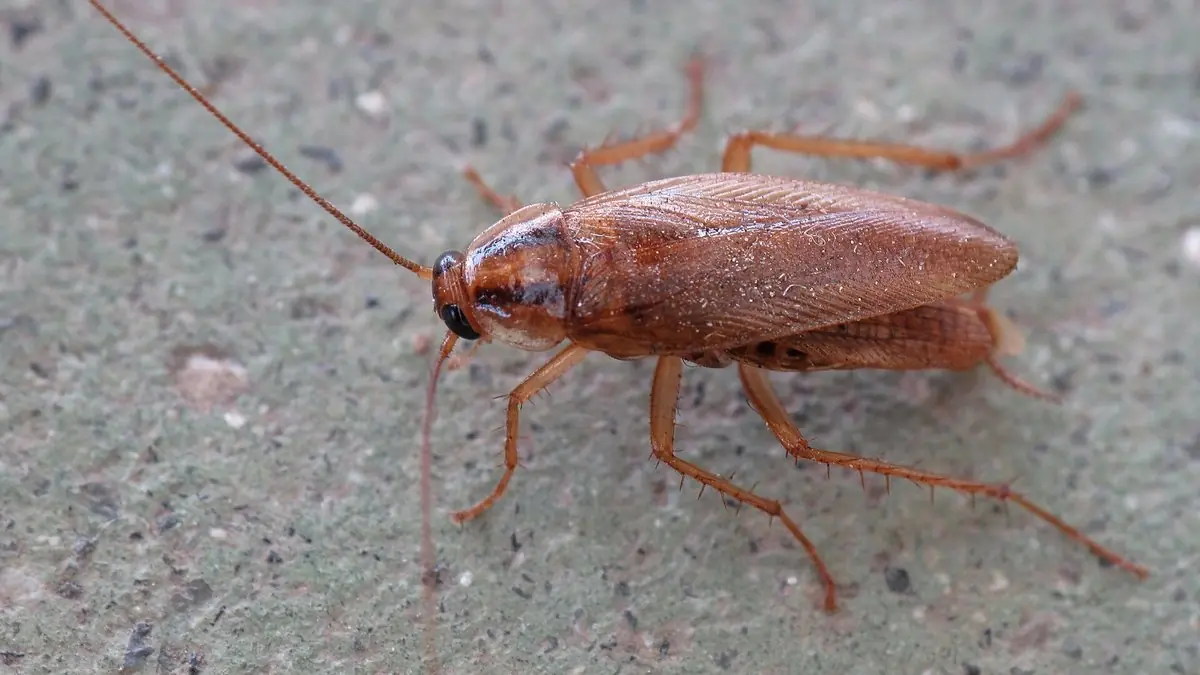
German cockroach, 12 to 15 mm
Amber to light brown with two dark stripes behind the head. Has wings but does not appear to fly. Hides under sinks, in cupboards and drawers and around fridges. The one most likely to be breeding inside your home.
Brown-banded cockroach, 10 to 15 mm
Pale glossy brown with lighter bands across the body. Hides high and dry: near ceilings, behind pictures, in furniture and small appliances. Activity can be scattered through a whole building, and it is hard to control with bait.
Oriental cockroach, 20 to 25 mm
Uniformly dark brown to black, slow, with short wings on females. Prefers cool, damp places at or below ground level: sub-floors, drains and leaf litter.
Smoky brown cockroach, about 30 mm
Shiny dark brown to black and fully winged. Lives in sheds, roof and wall voids, mulch and drains, flies short distances in warm weather and comes to lights at night.
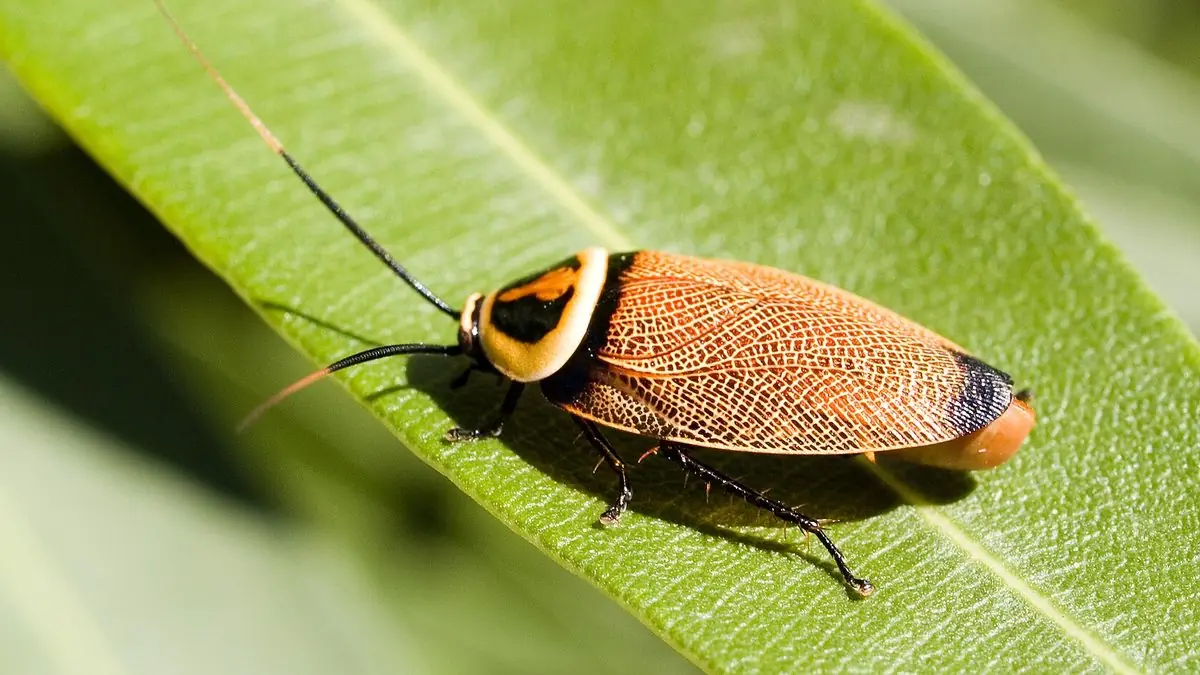
Australian cockroach, about 35 mm
Dark brown with yellow edging behind the head and a yellow streak on each wing. Introduced, despite the name. Mostly lives in gardens, woodpiles and bark, sometimes moving into voids.
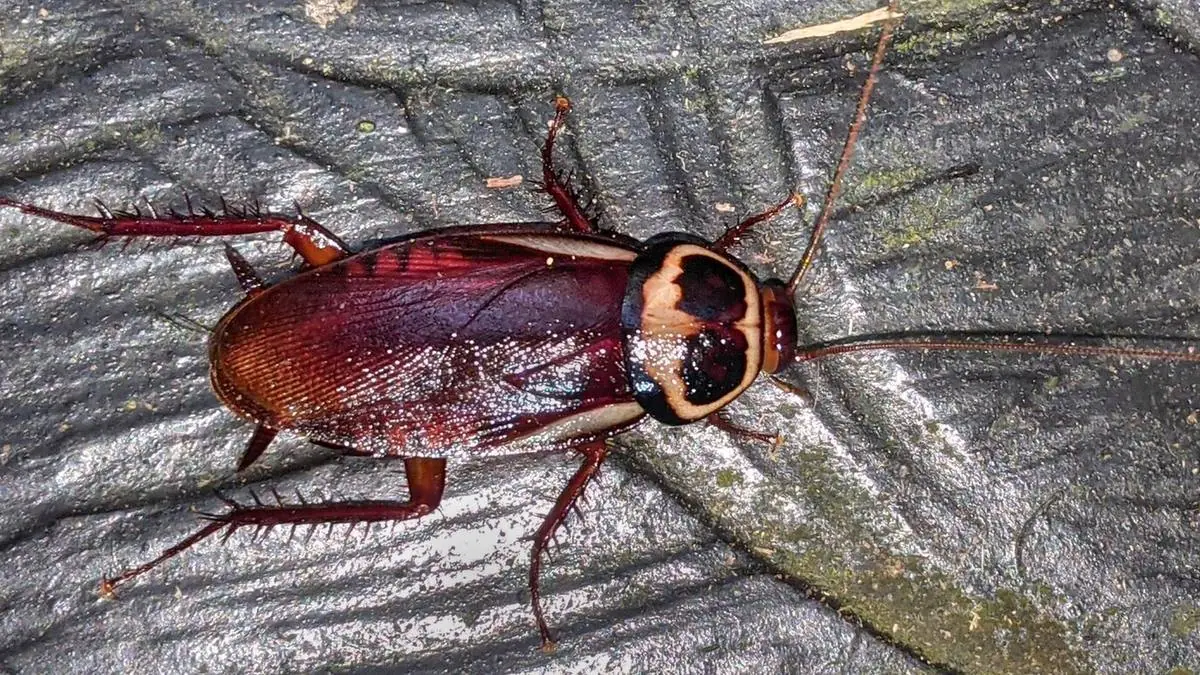
American cockroach, 35 to 40 mm
The largest pest species: reddish-brown with a pale yellow border behind the head. Lives in sewers, grease traps and roof, wall and sub-floor spaces rather than living rooms.
Native bush cockroaches
Australia has about 400 native species and none is a serious pest. A single large, wingless, dark cockroach near a door in a leafy garden is usually a visitor from the leaf litter, not an infestation. Leave garden natives alone.
Signs you have more than a stray
Check with a torch at night, under the sink, behind the fridge and at the back of cupboards and drawers.
- Small cockroaches in the kitchen when you switch the light on at night
- Cockroaches out in daylight, which often points to a large infestation
- Sightings away from the kitchen, such as in bedrooms
- Small dry droppings and dark smear marks under benches, along shelves and at the back of cupboards
- Shed skins and empty egg cases at the back of cupboards and drawers
- Females carrying an egg case on the end of the body
- Pale-banded cockroaches high in cupboards or inside small appliances
- A distinctive unpleasant smell, which develops when numbers are high
When is cockroach season in Melbourne?
German cockroaches have no real off-season. They live their whole lives indoors in warm, humid, undisturbed spots such as kitchens, so the weather outside matters far less to them than to the big species. Expect to see them in July as well as January.
The big species are what most people notice in the warmer months. American, Australian and smoky brown cockroaches can fly short distances in warm weather, and smoky browns are drawn to lights at night, so warm evenings in late spring and summer are when they tend to turn up on walls and verandahs. The oriental cockroach is the exception: it prefers cool, damp conditions and stays at ground level, around drains and sub-floors. If you see German cockroaches, act in whatever month it is; waiting for the weather to change will not help.
Why sprays and bug bombs often fail
In a published field trial in infested homes, retail foggers did not reduce German cockroach numbers, while gel baits did.
Fogger or surface spray
- The mist does not reach the cracks and undersides where cockroaches shelter
- Common spray insecticides repel German cockroaches and can scatter them to other rooms
- German cockroaches have widespread resistance to pyrethroids, so many survive the fogger insecticides that do reach them
- Leaves residue on kitchen benches, and spray near bait stops cockroaches feeding on it
Targeted baiting program
- Small placements of gel right beside the places they hide
- Cockroaches feed, return to shelter and die there
- Dust only in voids and behind panels, never on food surfaces
- Monitoring and follow-up until activity stops
What is worth trying yourself first
If you have seen only one or two cockroaches, these steps, drawn from health authority and university advice, are worth a week or two before you pay anyone. They also make any professional treatment work better, because bait competes with every crumb in the kitchen.
- Starve them. Store food in sealed containers, empty the kitchen bin daily, wipe up spills and do not leave pet food out overnight.
- Cut off water. Fix dripping taps and leaking pipes under the sink and dry out shower bases and sinks at night.
- Clean behind appliances. Pull out the fridge, stove and toaster, vacuum the debris (a HEPA-filter vacuum traps the allergens) and wipe the area.
- Remove hiding places. Get rid of stacked cardboard boxes, newspapers and magazines, and seal gaps around pipes, along skirting boards and inside cupboards.
- Use bait stations, not spray. Retail cockroach bait stations, placed within about 30 to 60 cm of each hiding spot (under the sink, fridge and dishwasher), work better than a can of spray. Follow the label, and keep them where children and pets cannot reach them.
Our guide on how to get rid of German cockroaches covers each step in more detail. If you still see cockroaches every night after two to three weeks, or you are seeing them in daylight or outside the kitchen, the population is beyond what retail products usually manage.
Tell us where you are seeing cockroaches
Give us your suburb, the type of home and roughly what you are seeing. We usually respond within the hour during business hours.
Thanks. Your request is in.
Your reference is . We usually respond within the hour during business hours. Need us sooner? Call 0485 511 588.
How our cockroach treatment works
This follows the four-stage method the Victorian Department of Health describes: inspect, remove food and shelter, treat, then follow up.
- 1
Inspect and identify
The technician checks under the sink, inside cupboards and drawers, around the fridge, dishwasher and stove, and in the bathrooms and laundry with a torch, looking for live cockroaches, droppings, skins and egg cases. The species decides everything that follows.
- 2
Point out food, water and shelter
You get a short list of what is feeding and sheltering them in your home: a leaking trap, a gap behind a kick panel, a stack of boxes. Treatment works far better when these are fixed.
- 3
Gel bait the hiding places
Many small, pea-sized placements of APVMA-registered gel go into cracks, hinges, behind kick panels and beside appliances, used strictly according to the label. Bait goes where cockroaches travel, not on surfaces you wipe. Some professional programs also add an insect growth regulator, which stops young cockroaches maturing into breeding adults; your technician can tell you whether it suits your situation.
- 4
Treat voids and the outside where needed
For the large outdoor species, the Complete package adds a perimeter treatment of eaves, windows, doors and fences, plus dusting of the roof void and sub-floor, which is where those cockroaches live and enter. Dust goes lightly into voids and behind panels, never on food surfaces.
- 5
Allow time for the bait to work
Bait is slow by design so cockroaches carry it back to shelter. Expect a week or more before you see fewer, and weeks rather than days for a heavy German infestation.
- 6
Follow up and monitor
Heavy infestations usually need more than one visit, because egg cases keep hatching after the first treatment, so ask for any follow-up to be included in your quote. A second round of baiting and checking is a normal part of the method, not a sign the first one failed.
Where the treatment reaches, and what it cannot do
The Essential package covers the inside of the home: the kitchen, bathrooms and laundry, where German and brown-banded cockroaches live, along with ants, spiders and silverfish inside. The Complete package adds the parts of the house the big species use: the roof void, the sub-floor, and the outside perimeter around eaves, windows, doors and fences.
Some honest limits. No treatment stops every large cockroach wandering in from a garden or a drain on a warm night, and native bush cockroaches will keep visiting leafy yards. Brown-banded cockroaches can be scattered through furniture and are hard to control with bait. Bait cannot compete with a kitchen full of open food, and the Department of Health notes that success depends on the cooperation of the people living there. And in a unit, a neighbour's untreated kitchen can keep supplying new cockroaches.
How to prepare for your cockroach treatment
- Empty the cupboard under the kitchen sink and any cupboards the technician needs to reach
- Put food, utensils and pet bowls away in sealed containers or another room
- Tell us beforehand about babies, pregnancy, asthma, allergies and every pet, including fish and birds
- Do not spray or bomb in the days before the visit, as it repels cockroaches from the bait
- Clear the area under and behind the fridge and stove if you can
- Arrange for pets to be out of treated areas until surfaces are dry
- Cover fish tanks and remove or cover bird cages before any spray or dust is used
After the treatment
- Stay out of any sprayed areas until they are dry; we tell you how long, and you can ask what product was used
- Open doors and windows for a few hours and wipe benchtops and utensils before preparing food
- Do not wipe, wash or vacuum away the gel placements
- Do not use fly spray or surface spray near the bait
- Keep up the clean-up: bins emptied, food sealed, no pet food left out overnight
- Expect to see some cockroaches for a week or more while the bait works
Cockroaches in apartments and shared walls
German cockroaches can move between units, mainly along water pipes and through the gaps where plumbing passes through shared walls. Research in apartment buildings overseas found that treating only some units seldom clears a building, because untreated units and common areas keep feeding the others.
If you live in a unit, treat your own kitchen and bathroom thoroughly, seal pipe gaps under the sink, and tell your building manager or owners corporation if neighbours are affected, since building-wide problems usually need coordinated treatment. Renters should tell the rental provider straight away. Our guide to pest control in apartments and strata buildings explains who looks after what.
What cockroach control costs
German cockroaches inside are covered by the Essential package. Choose Complete if large cockroaches are coming from the roof, sub-floor or garden.
- Essential, unit or apartmentInspection, identification and gel baiting in kitchen, bathrooms and laundry. 3-month service warrantyfrom $149 inc. GST
- Essential, house up to 3 bedroomsAs above, for a house. 3-month service warrantyfrom $189 inc. GST
- Essential, house 4+ bedroomsAs above, for a larger house. 3-month service warrantyfrom $229 inc. GST
- Complete, unit or apartmentAdds the external perimeter and, where the unit has them, roof void and sub-floor dusting. 6-month service warrantyfrom $219 inc. GST
- Complete, house up to 3 bedroomsAdds perimeter, roof void and sub-floor dusting for outdoor species. 6-month service warrantyfrom $279 inc. GST
- Complete, house 4+ bedroomsAs above, for a larger house. 6-month service warrantyfrom $339 inc. GST
All prices include GST. A double storey adds $49. Heavy German cockroach infestations usually need more than one visit, so ask for any follow-up to be included in your quote. See all packages on our pricing page.
Our cockroach service warranty
Every package comes with a written service warranty: 3 months for Essential, 6 months for Complete and 12 months for Total Protection. If treated cockroaches return to treated areas within that period, we come back and re-treat at no charge. Warranty conditions apply, and the warranty sits on top of your rights under the Australian Consumer Law.
The warranty covers the areas that were treated. Kitchen gel baiting alone will not cover cockroaches living in the roof or under the floor, so if you want those spaces treated and covered too, choose the Complete home pest package.
Keeping cockroaches out after treatment
- Clean the kitchen thoroughly at least weekly, including under and behind movable appliances
- Store dry food, cereal and pet food in sealed containers
- Fix dripping taps and leaks under sinks and in the laundry
- Check deliveries, cardboard boxes and second-hand appliances or furniture before bringing them in
- Do not stack cardboard boxes, newspapers or magazines in the house
- Seal gaps around pipes, behind skirting boards and inside cupboards
- Fit door sweeps and keep mulch, woodpiles and dense creepers away from the walls
- Keep compost bins screened and away from the house
Cockroach guides
Cockroach control near you
We cover the bayside and inner south-east, plus Oakleigh.
Sources for this page
- Cockroaches: pest control (Victorian Department of Health)
- Cockroaches (Better Health Channel)
- Native cockroaches (Australian Museum)
- Cockroaches: order Blattodea (Australian Museum)
- Field trial of total-release foggers and gel baits (BMC Public Health, 2019)
- Cockroaches: Pest Notes (University of California IPM)
- Cockroach biology and management (Texas A&M AgriLife Extension)
- Commercial pesticides fact sheet (Victorian Department of Health)
- First aid for poisoning (Victorian Poisons Information Centre)
- Pests, infestations and mould (Consumer Affairs Victoria)
Cockroach Control: common questions
How much does it cost to get rid of cockroaches?
For German cockroaches inside, our Essential package starts at $149 including GST for a unit and $189 for a house of up to three bedrooms. If large cockroaches are coming from the roof, sub-floor or garden, the Complete package adds a perimeter treatment and, for houses, roof void and sub-floor dusting, from $219. Heavy infestations can need more than one visit. Full details are on our pricing page.
Is there a cockroach problem in Melbourne?
The Victorian Department of Health lists six pest cockroach species for the state. We have found no published figures on how many Melbourne homes are affected or which suburbs are worst, so treat any such claim with caution. The one that causes real infestations is the German cockroach, which arrives in boxes, groceries and second-hand goods and spreads between units. The big ones you see on warm nights are mostly outdoor or drain species, or native cockroaches that are not pests.
What is the best way to get rid of cockroaches in Australia?
The Victorian Department of Health describes a four-step method: inspect and identify the species, remove food, water and shelter, use targeted treatment such as gel bait in cracks and dust in voids, then follow up and monitor. For German cockroaches, bait beats spray because sprays repel and scatter them. For the large outdoor species, the work is in the roof, sub-floor and around the outside of the house.
Why should you never kill a cockroach?
You can kill a pest cockroach, but squashing the odd one does nothing about the ones breeding behind the cupboards, and sprays can push German cockroaches into other rooms. The real exception is native bush cockroaches in the garden: Australia has about 400 native species, none is a serious pest, so there is no reason to kill them. Clean up any cockroach debris with a vacuum, ideally a HEPA-filter one, as it carries allergens.
How long after pest control do cockroaches die?
Gel bait is slow on purpose, so a cockroach has time to return to its hiding place before it dies. Expect a week or more before you see fewer, and several weeks for a heavy German cockroach infestation. Seeing some during that time is normal, and egg cases can keep hatching after the first visit. If treated cockroaches return to treated areas within your warranty period, we re-treat at no charge (warranty conditions apply).
Does one cockroach mean an infestation?
Not always. A single large, dark cockroach near a door on a warm night is usually an outdoor or native visitor. A small, light brown cockroach with two stripes behind the head in the kitchen is different: German cockroaches breed indoors, so one usually means more. Check under the sink and behind the fridge at night with a torch for droppings, skins and egg cases before you decide. Our cockroach identification guide can help.
Who pays for cockroach treatment in a rental?
Consumer Affairs Victoria says it depends on the cause. A renter may be responsible if their own actions attracted the cockroaches, and the rental provider if a fault in the property let them in or they were already there at the start of the tenancy. Tell the rental provider straight away in writing. Our guide on who pays for pest control in a Victorian rental covers the details.