The short answer
Ants keep coming back because the ants you see are foragers from a colony that is still intact. They follow scent trails to food, water or shelter. Spraying kills foragers but not the queens, wiping removes the trail but not the reason they came, and baits take days to weeks to work through the colony. Argentine ants can also move back in from next door within about two weeks.
Key points
- The ants on your bench are a small share of the colony. Until the nest is reached, more workers will follow the same scent trail.
- Spraying visible ants kills foragers only, and with many-queened species such as Argentine ants, losing one nest does not finish the colony.
- Baits are slow by design. More ants at a fresh bait is normal, fewer ants usually takes 5 to 10 days, and full control can take several weeks.
- Ants without food in sight are usually after water, shelter from rain or heat, or honeydew from aphids and scale on plants next to the house.
- No treatment keeps a home ant-free forever. The realistic aim is to keep ants out of the house, not out of the garden.
You sprayed the trail, wiped the bench and put out a bait, and two days later the ants are back in the same line. Why do ants keep coming back? Because everything you did reached the ants you could see, not the colony sending them. Reach the colony and remove the attraction, and the trail usually dries up.
Why do ants return to the same spot?
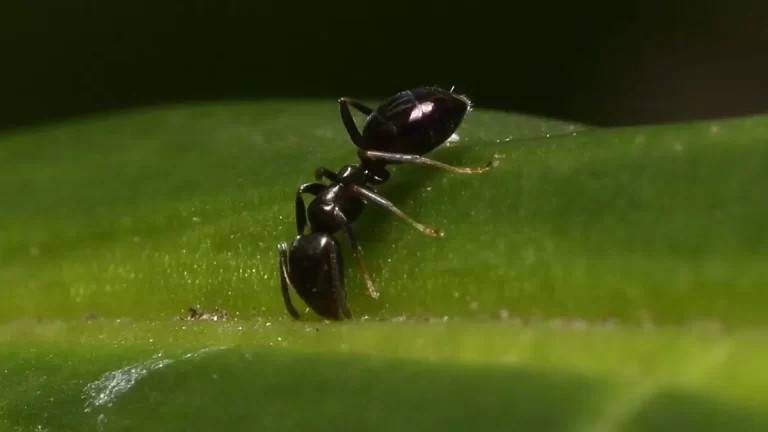
Ants mark their path with scent chemicals. When one finds food or water, it heads home and recruits nest-mates, so a single crumb can quickly become a busy trail. A few lone ants are usually scouts. A steady line means the colony has found something worth coming back for.
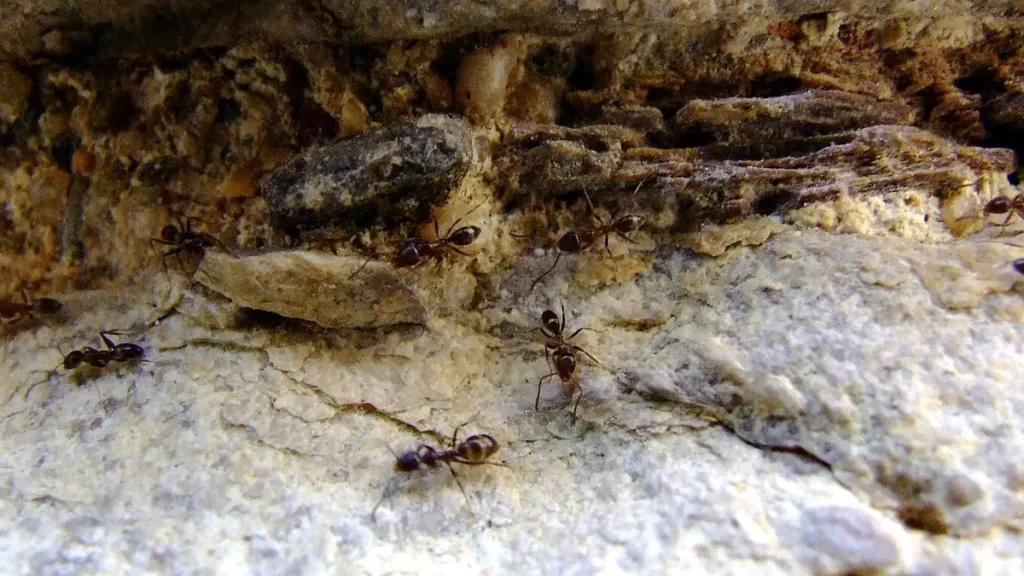
Trails follow edges, pipes and cables, which ants also use to get into a house. In Melbourne the usual suspects are small black ants and Argentine ants, and some nest in ceilings, wall cavities or behind cupboards. Our guide to tiny black ants in the house helps you work out which one you have.
Why do ants keep coming back after spraying?
A spray kills the foragers it touches. The queens and the brood stay in the nest, so numbers recover and a new line of workers turns up. A patchy perimeter spray is easy for ants to get around, and can even trap them inside.
Two of Melbourne’s common house ants are especially hard to finish with spray. Argentine ant nests have many queens, and white-footed house ant colonies spread by budding, with workers carrying brood off to start a new nest nearby. With these ants, losing one nest does not finish the colony. For Pharaoh’s ant, the Victorian Department of Health warns that spraying splits the colony into new ones; that effect has not been shown for every species.
A study of 69 Californian homes over 18 months found household pesticide use cut indoor Argentine ant numbers from one week to the next only when numbers were extremely high. Our comparison of ant bait and spray explains when each has a place.
Ants keep coming back after bait: why baits seem to fail
Baits are meant to be slow. Workers carry the bait home and share it with larvae and queens; a bait that killed on contact would never reach the nest. Expect more ants at a fresh bait at first: that means it is being taken. University guidance says to expect 5 to 10 days before you see fewer ants, and several weeks or more for full control.
When a bait genuinely fails, it is usually one of these:
- Wrong food. Melbourne’s common house ants lean to sweet foods; some other ants prefer protein or grease.
- Spray nearby. Surface spray on or around the bait kills the carriers before they get home.
- Disturbed. Wiping or moving bait once ants are feeding breaks the supply line.
- Empty or dried out. A bait that has run dry stops working.
- Too strong. A fast-killing bait stops foragers sharing it. For big Argentine ant infestations, University of California guidance prefers weak liquid borate baits to pre-packed stations of about 5 per cent.
- Better food elsewhere. A colony feeding on honeydew in the garden may ignore bait.
See how long ant bait takes to work for what is normal while you wait.
Why are there ants when there is no food?
Ants come in for water too (a dripping tap is enough), for shelter when rain floods their nests, and to escape hot, dry spells. That is why they turn up in a spotless bathroom; our article on ants in the bathroom goes room by room.
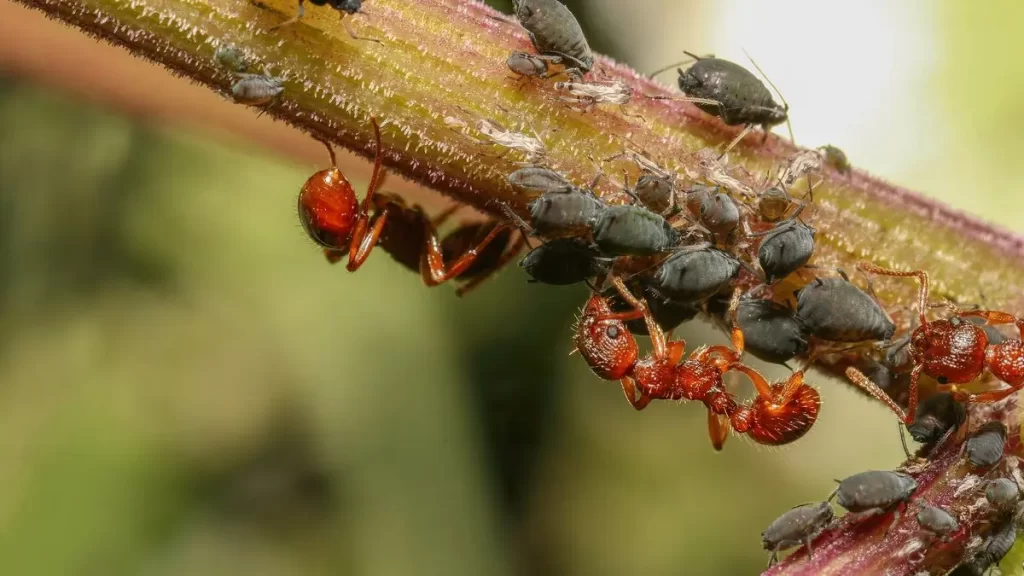
The other hidden food source is outside. Ants farm aphids, soft scales and mealybugs for the sugary honeydew they excrete, and protect them from predators in return. Honeydew is the main food of Argentine ants, which is why their slow, wide trails run up tree trunks and shrubs. A scale-covered shrub against the back wall keeps the colony fed right beside your kitchen.
Can ants come back from next door?
Yes, and in Melbourne it often is. Argentine ants were first verified in Australia in Melbourne in 1939 and have been established across the metropolitan area for decades. Their nests link up, one infestation can cover several hectares, and the Victorian Department of Health notes they can move back in from neighbouring land within two weeks, so a second treatment is often needed. More on this in our guide to Argentine ants in Melbourne.
A step-by-step reset to break the cycle
- Put the can away. Stop spraying the trail while you bait. Spray kills the carriers you need.
- Follow the trail. Trace the line to where it comes in, such as a gap at the skirting or a pipe hole, then look outside for the nest or the plant the ants are farming.
- Wash the trail. Wipe the indoor trail with soapy water or window cleaner. This removes the scent and clears the ants on it about as well as a spray.
- Take away the reason. Move food into sealed containers, wipe up crumbs and grease, empty the bin, fix leaking taps, and stand the pet bowl in a shallow moat of water.
- Test the bait. Put a little sweet bait and a little protein bait outdoors beside the trail or nest opening. Indoors, bait only at the entry point, since indoor bait can draw ants in. If ants are not feeding within minutes, try another type.
- Leave it alone. Do not wipe, move or spray near the bait. Top it up when it runs dry and give it 5 to 10 days.
- Seal the gap. Once traffic has dropped, seal the entry point with caulk. Petroleum jelly makes a temporary plug.
When to call a professional
Careful DIY handles many ant problems. Call for help when:
- you have tried two different baits for three weeks or more and the trail has not thinned
- the ants are coming out of a wall, ceiling, power point or light switch, and you cannot reach the nest (never spray into electrical fittings)
- several trails come from different directions, a sign of more than one nest
- wide, slow trails run along the fence line and up trees, the typical pattern of Argentine ants
- the ants return every time it rains, despite cleaning and sealing
Get a price for your ants problem
Three details and we’ll come back to you with a price. We usually respond within the hour during business hours.
Thanks. Your request is in.
Your reference is . We usually respond within the hour during business hours. Need us sooner? Call 0485 511 588.
What a professional does differently
The Victorian guidance for licensed operators starts with an inspection: follow the trails to find nests and entry points, identify the species, then choose a method to suit it. Treating the nest directly is usually the most reliable option.
Where nests cannot be reached, the technician treats trails and entry points with APVMA-registered products, used strictly according to the label. Some non-repellent sprays are labelled for use alongside baits, because they do not drive ants away from them. Gel baits go into cracks, and dusts into dry spots such as roof voids and electrical boxes. For Argentine ants the guidance is that the whole block, not just the house, may need treating.
Before the visit, put away food, pet bowls and toys. You and your pets stay out of treated areas until surfaces are dry, generally four to six hours, and your technician will tell you the time for the products used. Expect ants to taper off over days.
Ants are covered by our ant control service and home packages. The Complete package is from $279 including GST for a house up to three bedrooms. It covers the inside of the home plus the external perimeter, roof void and sub-floor dusting, with a 6-month service warranty (warranty conditions apply). See all prices. We usually respond within the hour during business hours.
How to stop ants coming back
No treatment keeps a home ant-free forever, and clearing ants from the garden is neither realistic nor useful, since they eat pests and dead insects. The aim is to keep them out of the house:
- Store food in sealed containers and keep benches free of crumbs.
- Fix leaking taps and other damp spots.
- Control aphids and scale on plants next to the house, and use sticky bands on trunks to stop ants climbing.
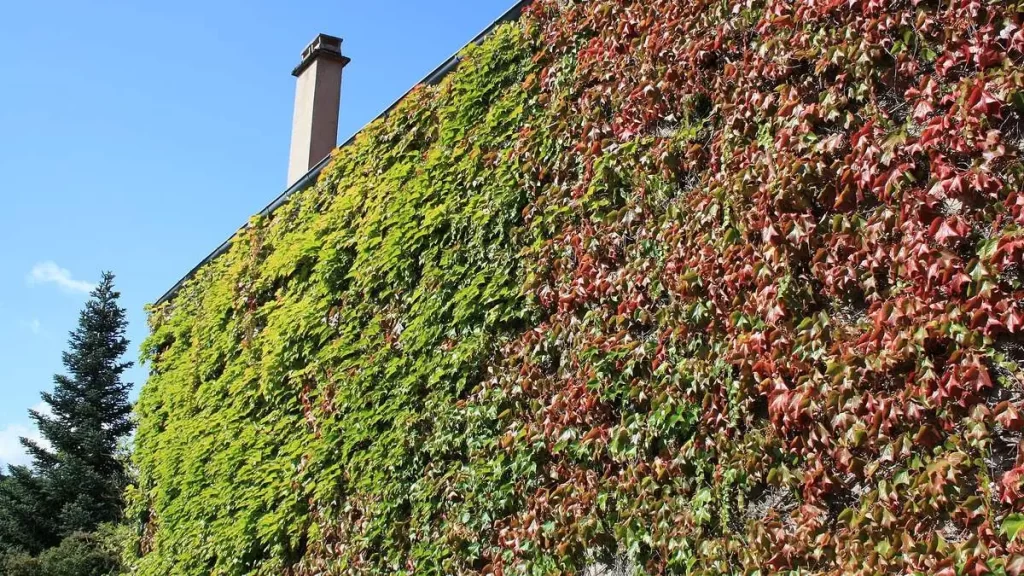
- Trim branches and creepers so they do not touch the walls, and keep mulch and plants a little back from the foundations.
- Seal cracks and gaps around pipes as you find them.
- Watch closely after heavy rain and during hot, dry spells, when ants move indoors.
Colonies grow fast as the weather warms, so late spring is a good time for these checks. To identify your ant, see our ant guide.
Common questions
How do I permanently get rid of ants in my house?
Nothing keeps a house ant-free for good, and no authoritative source supports a fixed ant-free period. Ants in the garden are normal and useful. What works is reaching the colony with a matched bait or a nest treatment, sealing entry points and removing what draws ants in. With Argentine ants on the street, expect to repeat control when they move back in from neighbouring land.
Why do ants keep coming back after I clean?
Wiping with soapy water, window cleaner or vinegar removes the scent trail and the ants on it, but not the nest or the reason they came. If water, shelter or food is still within reach, a scout soon finds it and lays a new trail. Weather matters too: a Californian household study found indoor Argentine ant numbers peaked in cold, wet weather, with a smaller peak in hot, dry spells.
Do ants go away in winter?
Most ants slow down in cold weather and rest in the nest without truly hibernating. Argentine ants are the exception to watch: in a Californian household study they were most common indoors in cold, rainy weather, and a Melbourne museum entomologist found them active in houses in cold weather back in 1939.
Will vinegar, cinnamon or coffee grounds stop ants coming back?
Vinegar is a reasonable trail cleaner but does nothing to the nest. Cinnamon and coffee grounds failed when tested on fire ant nests in Texas, and there is no good evidence for them against Melbourne house ants. A slow-acting bait the ants actually eat, plus sealing and cleaning, is what the evidence supports. See ant bait or spray for the detail.
Sources
- Ants: pest control, Victorian Department of Health
- Ants (Pest Notes), University of California Statewide IPM Program
- Ants as pests, Australian Museum
- Commercial pesticides: safety in the home, Victorian Department of Health
- Effect of weather on infestation of buildings by the invasive Argentine ant (Gordon et al., 2001), The American Midland Naturalist, via Stanford University
- Natural, organic and alternative methods for imported fire ant management, Texas A&M AgriLife Extension
- The Argentine ant in Victoria (Clark, 1941), Memoirs of the National Museum of Victoria (Museums Victoria)
- Victorian Poisons Information Centre, Austin Health