The short answer
There is no official spider season in Melbourne. Museum records show redbacks are active and their bites most common in summer (December to February), when black house spiders and garden orb-weavers also reach adult size. Late summer and autumn bring egg sacs, hatching spiderlings and wandering males, so many homes notice more spiders from summer into autumn.
Key points
- No authority defines a Melbourne spider season; the timing differs species by species.
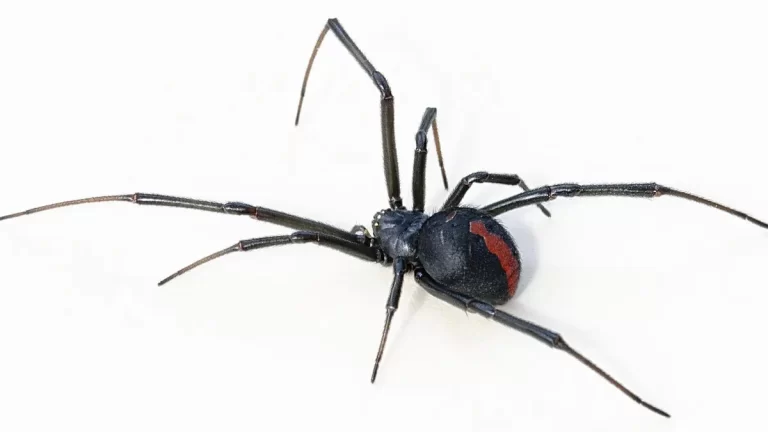
- Redbacks peak in summer and are rarely seen in winter, according to Museums Victoria.
- A sudden crowd of tiny spiders usually means one egg sac has hatched nearby, not a hidden nest.
- Young spiders arrive on the wind, so no spray keeps a house spider-free for good.
- Late spring to early summer, as webs start building up, is a sensible time to book a treatment.
Webs across the back door, a redback under the outdoor setting, a swarm of tiny spiders on the laundry ceiling. If it feels like spider season in Melbourne has arrived, you are partly right. No authority defines an official season, but museum records show that several common spiders reach adult size, breed and wander between summer and early winter. Here is what is active when, why numbers jump so suddenly, and what to do about it.
When is spider season in Melbourne?
Pest websites give at least three different answers: December to March, February and March, or autumn. None cites a source. The honest answer is that each species keeps its own timetable, so the “season” is really several overlapping ones.
Remember that Melbourne runs on southern-hemisphere seasons: summer is December to February, autumn March to May, winter June to August and spring September to November. Overseas articles about autumn spider invasions describe different spiders in a different climate, so they do not apply here.
Which spiders are active when
We built this calendar only from dated statements by Museums Victoria and the Australian Museum. Huntsmen are missing on purpose: we found no seasonal pattern for them in either museum’s published material, and we would rather leave a gap than guess.
| When | What is happening |
|---|---|
| Spring (September to November) | Young garden orb-weavers that hatched last autumn grow through spring. |
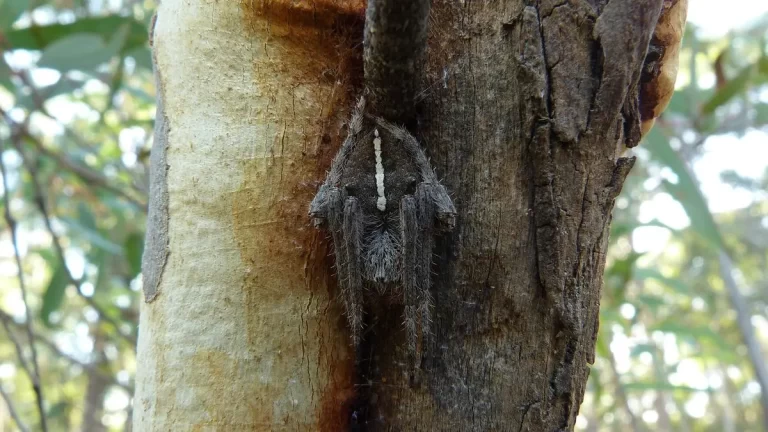
| Summer (December to February) | Redbacks are active and their bites are most common. Black house spiders mature. Garden orb-weavers reach adult size and spin large webs each evening. |
| Summer and autumn | White-tailed spiders are seen most often in and around houses. |
| Late summer to autumn | Garden orb-weavers lay eggs. Golden orb-weaver females produce egg sacs and then die. |
| Autumn | Orb-weaver spiderlings hatch and drift away on the wind. |
| Autumn and early winter | Male Melbourne trapdoor spiders leave their burrows to find mates and turn up in houses and pools. |
| Winter (June to August) | Redbacks are rarely seen. Young orb-weavers sit out the cold in tiny webs. |
Museums Victoria’s redback pattern is the one most worth knowing: redbacks are rarely seen over winter, while bites across Australia number in the hundreds over summer. That makes December and January the months to check sheds, outdoor furniture and children’s play areas (our guide to where redbacks hide around the home lists the spots). Our guide to common spiders in Melbourne homes helps you put a name to what you find.
Why are there so many spiders all of a sudden?
Museum records point to three main reasons, and none of them means your house is overrun.
- They have grown. Garden orb-weavers spend spring as small juveniles and reach full size in summer, so the same spiders and their webs simply become easy to see.
- Males go looking for females. Burrowing and web-bound males leave home to mate, which is when they walk into garages, laundries and pools.
- They follow food. Hunters such as white-tailed spiders go where insects are plentiful, and insects are plentiful in the warm months.
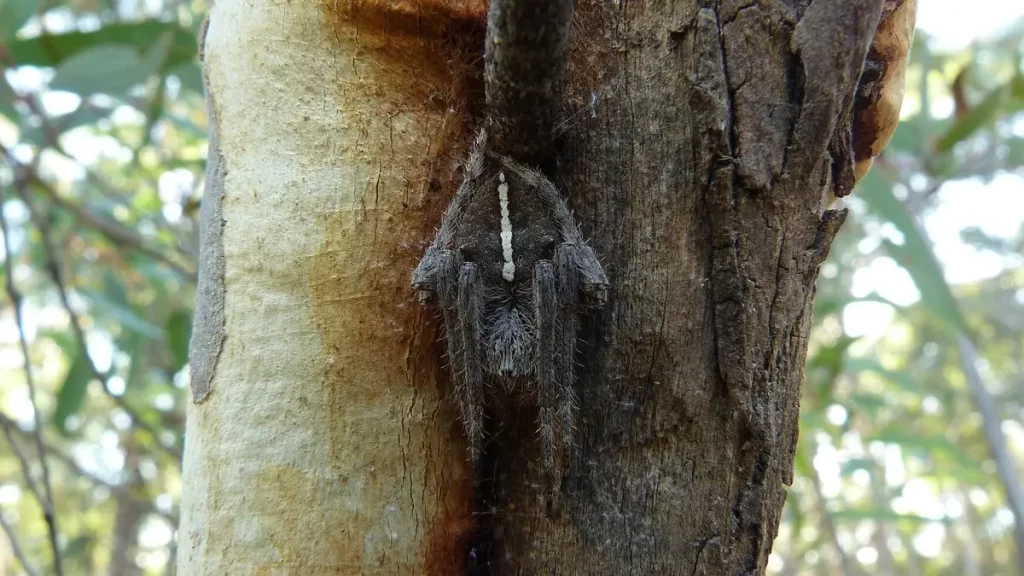
Weather plays a part for some ground-dwelling spiders. The Australian Museum notes that trapdoor males tend to wander in humid weather, and male mouse spiders turn up more often after rain.
Baby spiders in the house: what it means
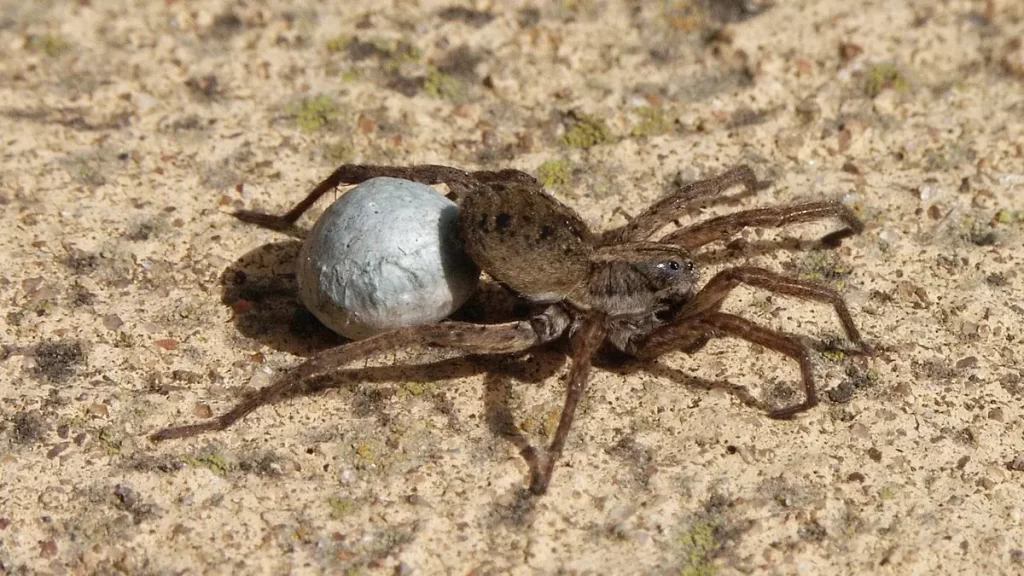
A cluster of tiny spiders on a ceiling or window frame usually means an egg sac has hatched nearby. A female redback can make up to ten round egg sacs, each about 1 cm across and holding roughly 250 eggs, and hang them in her web. The young hatch in two to four weeks. A female wolf spider carries her sac on her body, and the spiderlings then ride on her back.
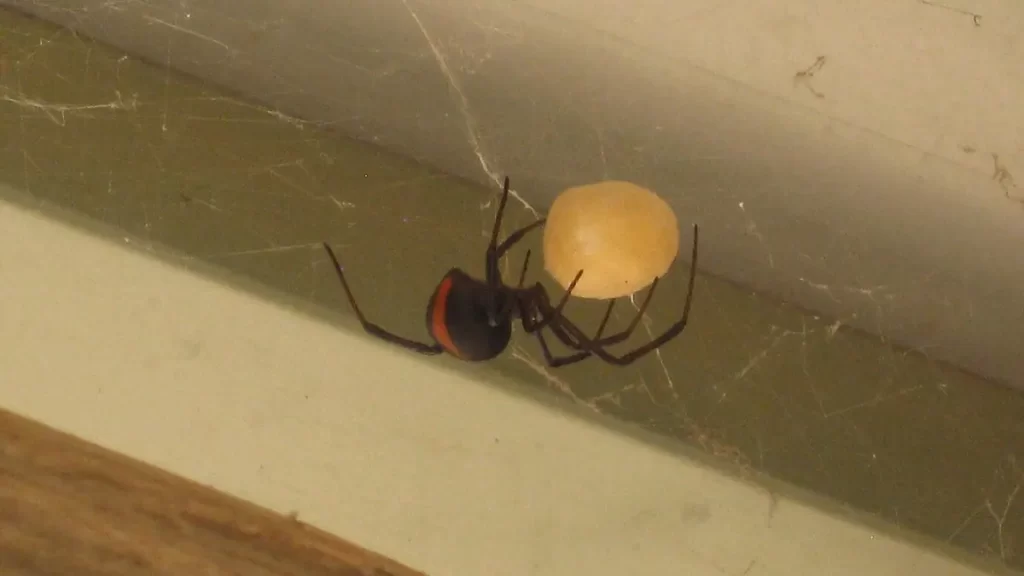
Most of those babies will not stay. Redback spiderlings eat each other, and the survivors leave by ballooning: they climb to a high point, let out silk threads and float off on the air. Ballooning spiders have been found about 4 km up and can travel hundreds of kilometres. When many take off at once, they can blanket a whole landscape in silk.
Ballooning is also why the Australian Museum says it is close to impossible to keep an area free of spiders for long. There is no single nest to destroy, and new arrivals keep landing.
What to do this week
These steps mostly follow advice from the Australian Museum, the Victorian Department of Health and Better Health Channel. Wear gloves and shoes while you work.
- Check the redback spots. Look under outdoor furniture, in sheds, cubby houses and stored boxes, and inside shoes left outside. Push a stick into the back of a web and twist it so the web, spider and egg sacs wrap around the stick.
- Brush down black house spider webs. Clear the lacy webs from window frames, eaves and fences with a broom. This also removes the main food of white-tailed spiders.
- Vacuum inside. Run the vacuum along window frames, room corners and storage areas to remove webs and the spiders in them.
- Shake out shoes, clothes and towels. In a study of confirmed redback bites, 28% happened while putting on a shoe. In a separate study, most white-tailed spider bites happened when the spider was caught in bedding, clothing or towels.
- Close the gaps. Fit draught strips under doors and flyscreens on windows and wall vents. Our guide on keeping spiders out of the house covers the gaps that matter most.
- Rethink outdoor lights. Lights draw insects, and black house spiders build where the insects gather. University of California advice is to keep light fittings away from doors and windows where you can. Switching off lights you do not need is a sensible extra, not a proven fix.
- Leave the garden spiders alone. Move an orb-weaver whose web crosses a busy path to a quieter spot rather than killing it. Skip garden sprays too: Better Health Channel advises against garden insecticides for spider-proofing because spiders may move indoors, and health authorities say spraying for ground-dwelling spiders can stir them up.
When DIY is not enough
Home measures handle most seasonal spiders. It is time to get help when:
- redbacks keep coming back to places where children play or where you reach in by hand
- new webs appear on eaves and windows every week, especially on a double storey you cannot reach safely
- you are finding spiders inside most days, or egg sacs in the roof space, garage or sub-floor
- a white-tailed spider keeps turning up in bedrooms, which often points to black house spiders, its favourite food, living nearby (see white-tailed spiders in the house).
Get a price for your spiders problem
Three details and we’ll come back to you with a price. We usually respond within the hour during business hours.
Thanks. Your request is in.
Your reference is . We usually respond within the hour during business hours. Need us sooner? Call 0485 511 588.
When to book a spider treatment
Late spring to early summer, as webs start to build up and before the redback peak, is a sensible time to book. A treatment works better against web-builders such as redbacks and black house spiders, which live in fixed spots a technician can find. Spiderlings that later land on treated surfaces are affected while the treatment lasts.
A licensed technician sprays the places spiders shelter, such as eaves, window frames, doors and fences, using APVMA-registered products strictly according to the label. Roof voids and sub-floors are dusted. We tell you how long to stay out of treated areas (usually until surfaces are dry). Your technician will also tell you how long to leave webs in place.
Be wary of anyone who promises a spider-free home. Protection fades with weather and new arrivals, and wandering hunters such as huntsmen and white-tails are harder to control than web-builders. Our Complete package covers inside, the external perimeter, the roof void and the sub-floor, from $279 including GST for a house of up to three bedrooms, with a six-month service warranty (warranty conditions apply). See all package prices, our spider control service or the spider library.
Common questions
Is spider season worse this year?
Nobody can say for sure. No Australian authority publishes a yearly spider count, so claims that a season is "the worst ever" have nothing behind them. What the museum records do show is that sightings follow insect numbers, the mating wanderings of males and, for some burrowing spiders, rain and humid weather. A warm, wet stretch that brings out insects can mean more spiders around your home that year.
Do spiders come inside to get warm in autumn?
That claim is common online, but Museums Victoria gives three different reasons spiders come indoors: to hunt, to find a sheltered spot for a web, and to look for a mate. Warmth is not on the list. Autumn is when some males, such as the Melbourne trapdoor spider, leave their burrows to find females, which is why they turn up inside.
What is the big dark spider in my pool in autumn?
In Melbourne it is often a male Melbourne trapdoor spider, which wanders in autumn and early winter and is regularly mistaken for a funnel-web. Sydney funnel-webs do not occur in Victoria. Do not assume a spider on the pool floor is dead: some survive many hours under water. Lift it out with the pool scoop, never your hand. Treat any bite from a big black spider as an emergency: call 000, keep the person still and apply a pressure bandage. Our guide to funnel-webs and their Melbourne lookalikes has more.
How long should I leave the webs after a spider treatment?
A few days, or as your technician advises. One registered product label recommends leaving webbing in place for a few days because the web itself is treated. After that, brush webs down: any fresh web that appears shows you where a new spider has moved in. If you are still seeing spiders, our article on spiders after pest control explains what is normal.
Sources
- Your eight-legged housemates, Museums Victoria
- Garden orb-weaving spiders, Australian Museum
- Redback spider, Australian Museum
- Spiders in the house and garden, Australian Museum
- White-tailed spider, Australian Museum
- Melbourne Trapdoor Spider, Stanwellia grisea, Museums Victoria Collections
- Spiders, Better Health Channel, Victorian Department of Health
- Spiders: technical note number 12, Victorian Department of Health