The short answer
For ants in the kitchen, wipe the trail away with detergent and water, put sweet food and crumbs out of reach, and do not spray the trail. Then follow the ants back to where they come in, seal the gap, and use a slow-acting bait the ants actually eat. Expect fewer ants in about 5 to 10 days and full control in several weeks.
Key points
- Wiping a trail with soapy water removes the scent the other ants follow; spraying only kills the few ants you can see.
- Find where the trail enters the kitchen before you bait, and put bait near that point, outdoors if you can.
- Bait only works if the ants eat it: if they walk past a fresh bait, it is probably the wrong bait or the wrong spot.
- More ants at a fresh bait for the first few days is expected and means they are taking it.
- Sealed containers, clean benches, fixed leaks and sealed gaps give the next scout ant little reason to bring the rest in.
A line of tiny ants is running along the splashback to the sugar bowl, the kettle or a smear of jam by the sink. Ants in the kitchen are fixable, but grabbing the spray usually makes the job longer. Clean the trail tonight, find where it comes in and bait it properly this week, then close the gaps so it does not happen again. Not sure which ant you have? Start with our guide to tiny black ants in the house.
Why are there suddenly ants in my kitchen?
One scout finds food or water, goes home and lays a scent trail, and before long its nest-mates are following it. In southern Australia, trails of tiny ants in the kitchen are a familiar sign of warming weather, when colonies are growing and gathering food for their young. Wet spells and hot, dry spells push them inside too, looking for shelter and water.
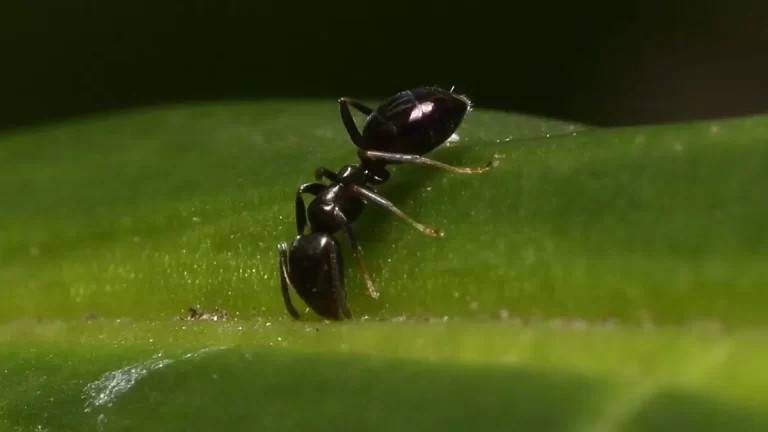
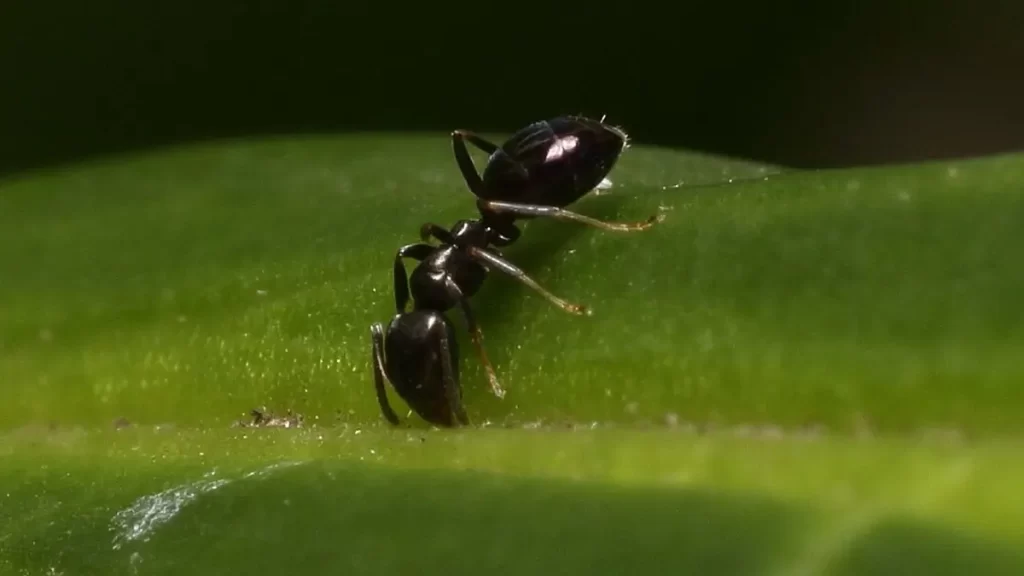
The ants most often behind Melbourne kitchen trails are two small black ants, the black house ant and the white-footed house ant (Victorians call both “black ants”), and the slender brown Argentine ant. All three lean towards sweet food. The white-footed house ant is more active at night, so a trail that appears after dark points to it. It is also one of the few ants that will nest indoors, in wall cavities and behind cupboards and skirting boards.
Tonight: break the trail without scattering the colony
- Work out what they are after. Follow the line to the end: an open honey jar, the fruit bowl, the pet bowl, a sticky bench or a dripping tap. Put that food in a sealed container or the fridge.
- Note where the trail goes. Before you wipe anything, look at where the line disappears: a gap behind the splashback, a cupboard hinge, a window frame, a pipe hole under the sink. That is tomorrow’s starting point.
- Wipe the trail with detergent. Warm soapy water, window cleaner or a vacuum removes the ants and the scent trail they follow. University guidance says this clears foragers about as well as an insecticide spray.
- Do not spray. A spray kills the ants you can see and leaves the nest untouched. It also works against bait, which is why university guidance says not to use sprays while you are baiting.
- Clear the benches before bed. Crumbs, grease, dirty dishes and an open bin bring scouts back.
This week: find the entry point and bait it properly
Ants follow pipes, cables and other structural lines, so check where these meet the wall. Seal any gap you find with a bead of caulk; a smear of petroleum jelly works as a stop-gap. If ants still get in, use bait.
A bait is a slow-acting insecticide mixed into food. Workers carry it home and share it mouth to mouth with the colony, including the queens; a fast kill would stop them before they could. It also has to suit the ant: the small black ants and Argentine ants in kitchens mostly take sweet baits, while some other species prefer protein or grease.
- Place it near the entry, outdoors where you can. University guidance is to bait mainly outdoors, near trails and nests, because bait inside can draw more ants in. Bait indoors when you cannot find the way in or the ants keep coming.
- Watch for a few minutes. Ants that like a bait start feeding on it quickly. If they walk past a fresh bait, it is probably the wrong bait or the wrong spot, so move it or try another type.
- Expect a crowd at first. More ants at the bait for the first few days is expected and means they are taking it.
- Leave it alone. Do not wipe, spray or move bait once ants are feeding, and replace it when it is empty or dried out.
- Be patient. Expect about 5 to 10 days before you see fewer ants, and several weeks or more for full control.
For why the two clash, see ant bait or spray: which works.
Ants in the kettle, dishwasher and cupboards
The kettle. A WA Government fact sheet says white-footed house ants nest in electrical equipment and can get into small appliances such as kettles and microwave ovens. The same ant prefers sweet liquids. Unplug the kettle, empty and rinse it, wipe the base and the bench under it, and follow the trail back. Do not spray insecticide into or around an appliance; bait on the trail near it, never inside it.
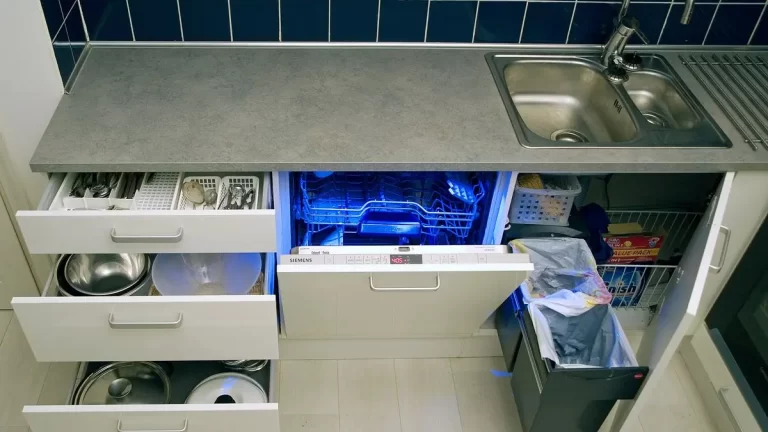
The dishwasher. There is little official advice written for dishwashers, so go by what kitchen ants want: sweet residue, food scraps and water. Clean the filter, wipe the door seal with detergent and run a cycle. Then check under the sink for a slow leak, because moisture attracts ants, and look for a trail running along the pipes into the cupboard.
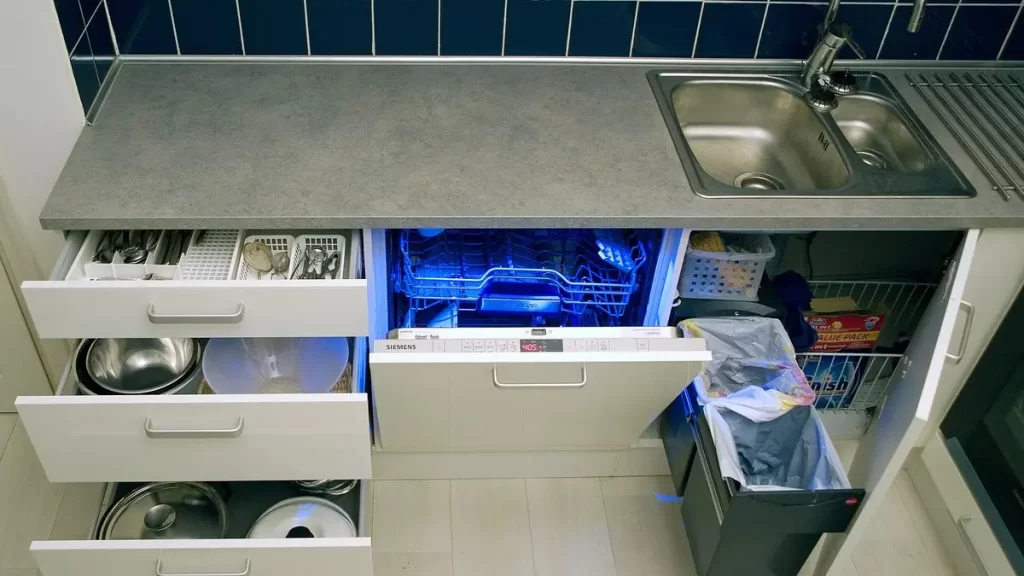
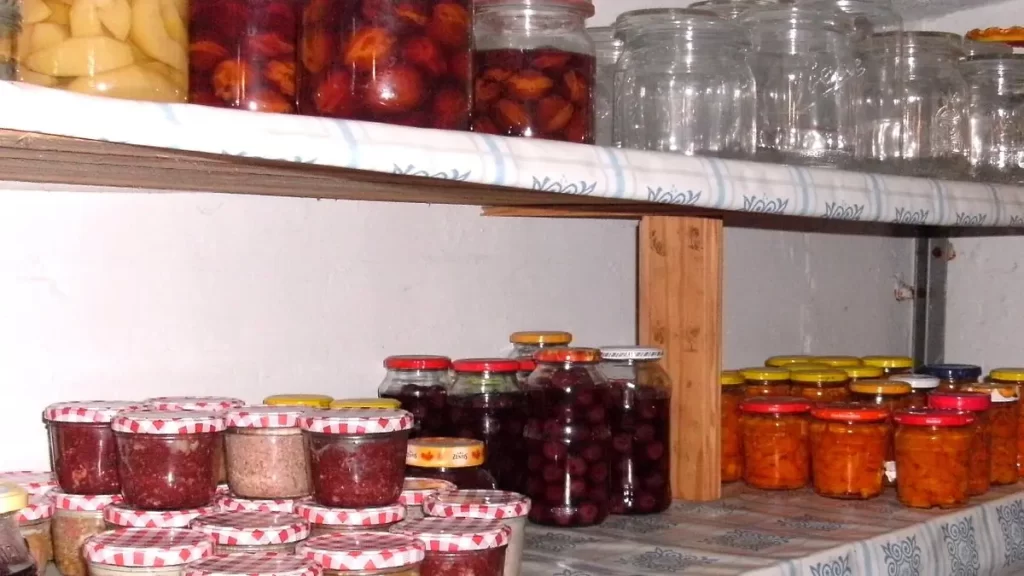
Cupboards and the pantry. Ants in the kitchen cupboards are often after food in bags or opened packets. Move dry goods into jars or containers with sealing lids, wipe the shelves, and check the back corners and hinges for the entry point. A trail that comes out from behind a cupboard or skirting board, day after day, may mean a nest in the wall (see ants nesting in walls and ceilings).
Are ants in food a health risk?
Health sources differ. The Victorian Department of Health says pest ants gather in food preparation areas and have the potential to spread disease. A University of Sydney entomologist told the ABC that the ants that usually come into houses are generally not a health threat, and that the practical problem is ants getting into unsealed food. Either way, keep food sealed, wipe benches before cooking and throw out food the ants have got into.
When kitchen ants need a professional
Most kitchen trails respond to the steps above. Call a licensed technician when:
- the trail is still busy after two or three weeks of the right bait, correctly placed
- you cannot find where the ants are getting in
- ants are coming from inside a wall, behind cupboards or out of power points or light switches
- ants ignore every bait you try
- the kitchen, bathroom and laundry all have trails at once (see why ants turn up in the bathroom)
Get a price for your ants problem
Three details and we’ll come back to you with a price. We usually respond within the hour during business hours.
Thanks. Your request is in.
Your reference is . We usually respond within the hour during business hours. Need us sooner? Call 0485 511 588.
What a kitchen ant treatment involves
Our ant control service works the way the Victorian health department’s guidance for operators describes. The technician inspects the house and garden, follows the trails back to the nest and the entry points, and identifies the species, because the right product depends on the ant. Where the nest can be reached it is treated directly. Otherwise the trails and entry points are treated, and gel bait goes into cracks and crevices beside the trails, away from food preparation surfaces. All products are APVMA-registered and used strictly according to the label.
For ants inside, our Essential home package covers inspection and identification, ants, cockroaches, spiders and silverfish inside, and gel baiting in the kitchen, bathrooms and laundry. It starts from $149 for a unit and from $189 for a house up to three bedrooms, all prices including GST, with a three-month service warranty (warranty conditions apply). If the ants come in from the garden, the Complete package adds an external perimeter treatment. Compare options on our pricing page or see what a general home pest treatment covers.
To prepare, clear the benches, put food, utensils and pet bowls away, and tell us about pregnancy, young children, allergies and pets. If any area is sprayed, we tell you how long people and pets should stay out (usually until surfaces are dry). Afterwards, wipe benches before preparing food, but leave the bait spots alone and do not spray near them.
How to keep ants out of the kitchen
- Store sugar, honey, cereal and pet food in sealed containers, not bags or opened packets.
- Wipe up crumbs, grease and spills nightly, and empty and clean the bin often.
- Fix dripping taps and leaks under the sink.
- Seal gaps around pipes, benches, skirting boards and window frames.
- Stand the pet bowl in a shallow dish of water so ants cannot reach the food.
- Trim shrubs touching the house and deal with aphids and scale on plants by the kitchen door, because ants farm them for honeydew.
None of this makes a home immune, because weather and neighbouring colonies still play a part, but the next scout finds little worth recruiting for. Read more about the species in our ant library.
Common questions
Does vinegar get rid of ants in the kitchen?
Vinegar works as a trail cleaner. A University of Sydney entomologist quoted by the ABC suggests wiping benches with vinegar or bleach to break up the scent trail, and soapy water does the same job. There is no good evidence that vinegar harms the nest or keeps ants away for long, so treat it as tonight's clean-up, not the fix.
Why do ants come back after I spray them?
A spray kills the foragers it touches, but the ants you see are usually a small share of the colony. The queens and the rest stay in the nest and send out more workers, so the trail returns. Our guide to why ants keep coming back walks through the usual reasons and what to change.
What smell do ants hate?
Peppermint, citrus, cinnamon and coffee grounds are popular, but there is no good evidence that any scent keeps ants out of a kitchen. Formulated plant-oil sprays kill ants they touch and leave little behind, and cinnamon and coffee grounds failed when tested on fire ant nests in the United States. Our look at home-made and natural ant killers covers what does work.
How long does ant bait take to work in a kitchen?
University guidance says to expect 5 to 10 days before you see fewer ants and several weeks or more for full control. Large infestations take longer, and Argentine ants can move back in from next door within a couple of weeks, which is why the Victorian health department says baiting needs patience. More detail is in how long ant bait takes to work.
Sources
- Ants - pest control, Victorian Department of Health
- Ants: Pest Notes, University of California Statewide IPM Program
- White-footed house ant fact sheet, Department of Primary Industries and Regional Development, Western Australia
- Tiny ants and what to do about them, ABC News
- Ants as pests, Australian Museum
- Commercial pesticides: safety in the home, Victorian Department of Health
- Household pesticides, Victorian Department of Health