The short answer
Tiny black ants in a Melbourne house are most likely the black house ant (2.5 to 3 mm) or the white-footed house ant (2.8 to 3.5 mm); small brown trails are often Argentine ants. They come in for food, water and shelter, especially in warm, wet or very dry weather. Wipe the trail with soapy water, seal the gap and use a sweet ant bait rather than a spray, which only kills the foragers.
Key points
- Two different small black ants share the name “black house ant” in Victoria, and a tiny brown trail is often the Argentine ant.
- Spraying the ants you can see kills the foragers only. Bait carried back to the nest is what reaches the queens.
- More ants around fresh bait is normal. Expect about 5 to 10 days before numbers fall and several weeks or more for full control.
- Small house ants do not damage sound timber, but nests in walls, ceilings or appliances are hard to reach and often worth a professional treatment.
Tiny black ants in the house usually appear as a thin, busy line across the kitchen bench or along a skirting board, often on the first warm days of spring. In Melbourne the likely culprits are two small black ants and one small brown one. All three can be controlled once you stop spraying the trail and start working on the nest.
Which tiny black ant is it?
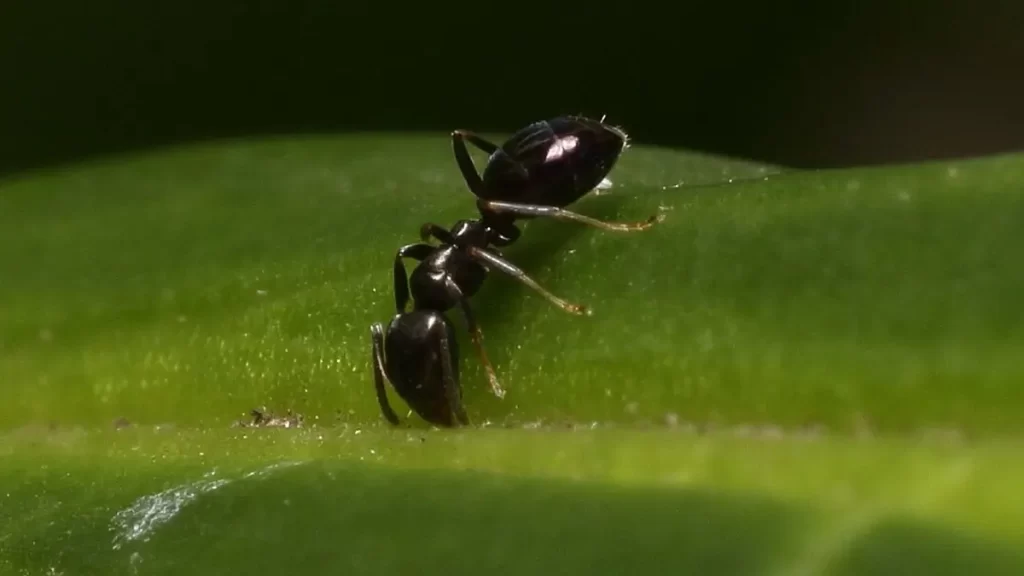
In Victoria, two different ants answer to “black house ant” or simply “black ants”. The Victorian Department of Health uses “black house ant” for Ochetellus glaber, and says the white-footed house ant (a Technomyrmex species) is the one Victorians often call “black ants”. The third, the Argentine ant, is brown but can look dark at a glance.
| Ant | Size and colour | Where it nests | Quick clue |
|---|---|---|---|
| Black house ant | 2.5 to 3 mm, intensely black, stocky | Path edges, rockeries; indoors in ceilings, wall cavities, subfloors | Strong smell when crushed (not everyone notices it) |
| White-footed house ant | 2.8 to 3.5 mm, shiny black, workers all one size | Mostly outdoors; small nests in wall cavities, behind cupboards | More active at night; may carry white brood to a new nest |
| Argentine ant | 1.5 to 3 mm, slender, brown | Tree bases, path and building edges, lawns | Slow, wide trails, often up tree trunks; no smell when crushed |
The white-footed house ant’s pale feet only show under magnification. A better clue is where it turns up: it is one of the few ants that will nest indoors, in wall spaces, pot plants and electrical equipment, and it can get into appliances such as kettles and microwave ovens.
What if they look brown?
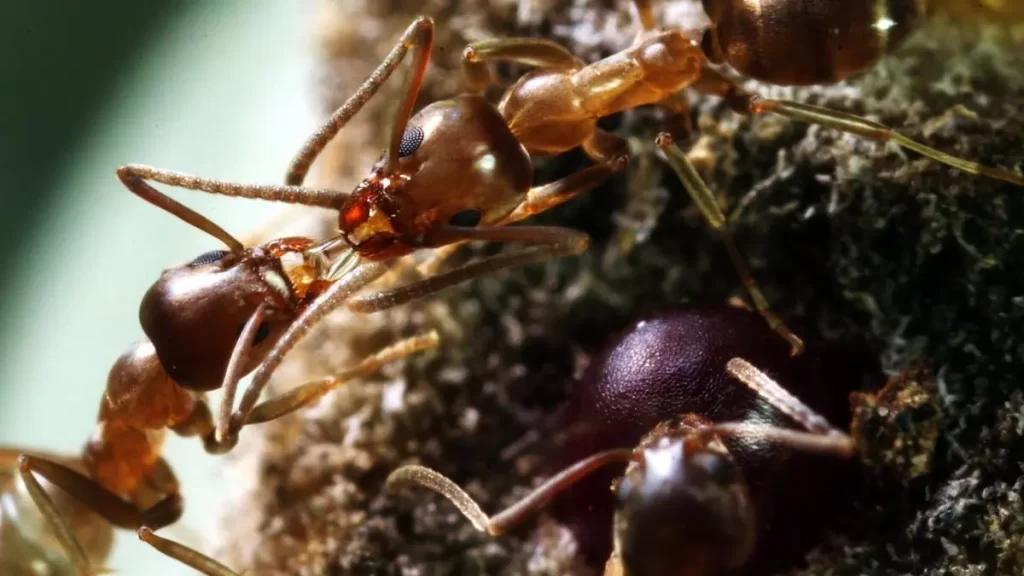
For a brown trail, suspect the Argentine ant first. Australia’s first verified record was in Melbourne in 1939, and it is long established across the suburbs. Many pest websites name the coastal brown ant instead, but it has only a handful of Victorian records; it is a major house ant in Perth. See our guide to Argentine ants in Melbourne.
What about “sugar ants”?
Museums use the name for the banded sugar ant, a large native ant of about 5 to 15 mm that forages at night and rarely comes indoors. Many people use it for any small ant that likes sweet food. If yours are a few millimetres long, they are not banded sugar ants.
Still not sure? Text a sharp, close photo of a few ants beside a coin to 0485 511 588. The right bait depends on the species.
Why tiny ants turn up all of a sudden
Ants slow down in cold weather and become more active as it warms, which is why trails so often appear in spring. Heavy rain floods nests and sends ants looking for shelter, and Argentine ants in particular may move indoors in wet weather. Long hot, dry spells bring them in looking for water, so they turn up at sinks, showers and dripping taps.
The “sudden” part is recruitment. One scout finds a crumb or a drip, lays a scent trail home, and its nest-mates follow. That is how a few wandering ants become a busy line.
Do black house ants bite or damage the house?
Black house ants can bite but do not sting. Sources disagree on whether white-footed house ants bite at all, and Argentine ants have no working sting. The stinging ants around Melbourne are bigger outdoor species: bull ants and green-head ants in gardens and, mainly in outer and bushland areas, jack jumpers. See bull ants and jack jumpers in the garden.
None of these ants damage sound timber. Ants in walls use gaps that already exist, and Australian carpenter ants prefer moist, rotting wood and rarely cause structural damage. If you are finding winged insects or soft timber, check for flying ants or termites. The real nuisances are ants in food and nests in wall cavities or appliances.
What to do about a trail today
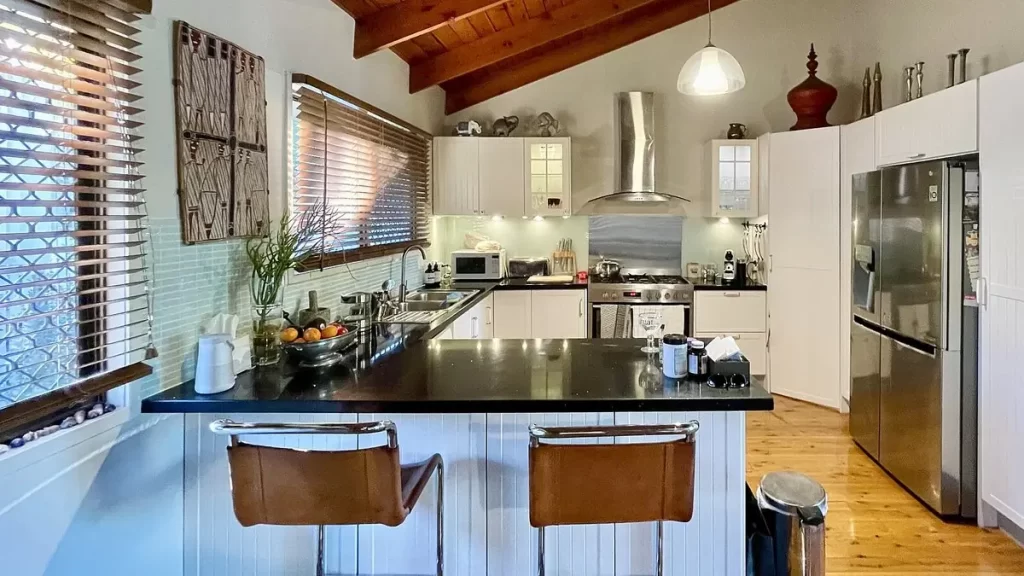
Skip the fly spray. It kills the foragers you can see, while the queens stay in the nest and send more.
- Follow the trail first. One end leads to what the ants are eating or drinking, the other to the gap they use to get in.
- Remove what they came for. Seal sugar, honey, cereal and pet food in containers, wipe up spills, empty the bin and fix dripping taps. Stand pet bowls in a shallow dish of water.
- Wash the trail away. Soapy water, window cleaner or a vacuum removes the ants about as well as a spray, and removes the scent trail others follow.
- Seal the entry point. Caulk the crack or the gap around a pipe. Petroleum jelly works as a stop-gap.
- Bait what you cannot reach. All three ants lean towards sweet food, so start with a registered sweet ant bait and follow its label. Put it outside near the trail or entry point; bait indoors only if you cannot find the way in, because indoor bait can draw more ants inside.
- Then leave it alone. More ants at fresh bait is a good sign: they are carrying it home to the queens. Do not spray near it or wipe it up. Expect about 5 to 10 days before numbers fall and several weeks or more for full control. If they ignore it, try a different bait.
For a room-by-room plan, see ants in the kitchen: what to do.
When it is time to call a professional
Get help, or ask for an ant treatment quote, when:
- ants return within weeks despite cleaning and baiting (see why ants keep coming back)
- they come out of walls, ceilings, skirting boards or power points, a sign of a nest in the building
- they ignore every bait, which often means it does not suit the species
- you see ants carrying white brood as a colony buds into new nests
- trails run along fences and trees around the whole block, typical of Argentine ants
- there is nowhere to put bait that children or pets cannot reach
Get a price for your ants problem
Three details and we’ll come back to you with a price. We usually respond within the hour during business hours.
Thanks. Your request is in.
Your reference is . We usually respond within the hour during business hours. Need us sooner? Call 0485 511 588.
How a professional ant treatment works
A licensed technician follows the trails inside and out to find nests, entry points and food, and confirms the species. In Victoria, anyone applying pesticides as a business must hold a pest control licence.
Treating the nest directly usually gives the most reliable result. Otherwise the technician treats travel routes and entry points such as door frames, window sills and wall voids, dusts roof voids and electrical fittings where spray is unsuitable, and places gel or liquid bait beside active trails. We use APVMA-registered products, strictly according to the label.
Beforehand, put away food, utensils, pet bowls and toys, and tell us about pregnancy, babies, allergies and pets. Keep people and pets out of treated areas until surfaces are dry: the general Victorian advice is four to six hours, and your technician will confirm the time. Afterwards, leave bait alone and keep up the cleaning.
Results take time. One professional liquid bait label says to expect an effect within 7 days and most nests gone within 14, with up to two months when numbers are very high or ants re-invade. Argentine ants can move back from next door within two weeks, so they often need a second treatment.
Our Essential home package starts from $189 including GST for a house up to three bedrooms: inspection and identification, inside treatment for ants, cockroaches, spiders and silverfish, and gel baiting in the kitchen, bathrooms and laundry, with a 3-month service warranty (warranty conditions apply). The Complete package adds the outside perimeter, roof void and subfloor. Compare them on our pricing page or read about our ant control service.
Keeping small ants out
Garden ants do useful work, and clearing a whole yard of them is unrealistic. The aim is to keep them out of the house.
- Store food sealed, not in opened packets, and wipe benches each night.
- Fix leaking taps, especially in hot, dry spells.
- Trim plants so they do not touch the walls, and keep mulch back from the foundations.
- Control aphids and scale on nearby plants; ants tend them for their sugary honeydew, and black house ants may carry aphids onto pot plants.
- Seal cracks around pipes and skirting boards as you find them.
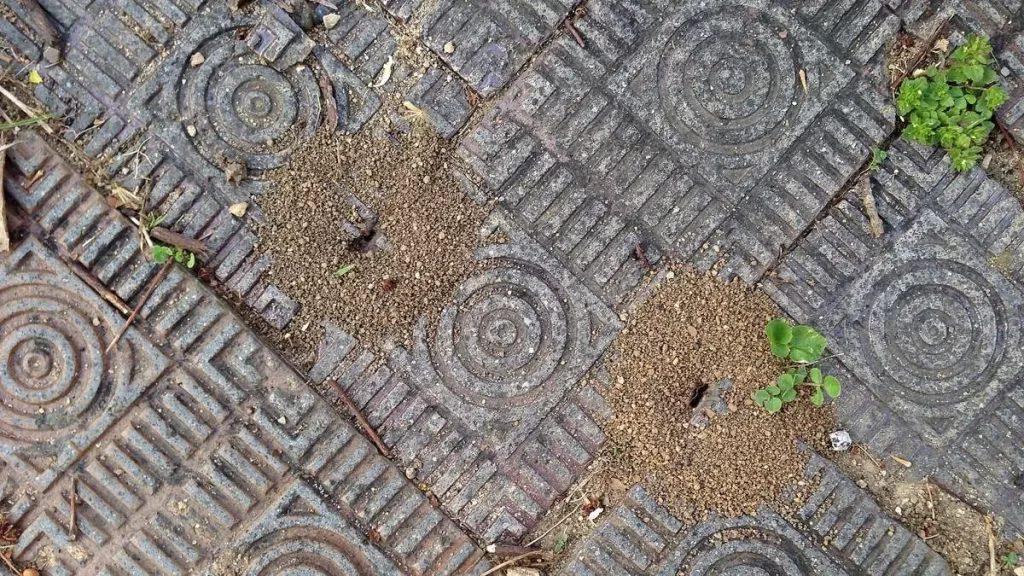
Small mounds of fine soil between pavers mark a nest entrance. They do little harm, but a nest beside the back door is often where the next kitchen trail starts, so it is a good spot for outdoor bait. Learn more in our ant library.
Common questions
Why are there tiny black ants in my bathroom when there is no food?
They are usually after water. Ants search for moisture during long hot, dry spells, and leaking taps, wet shower recesses and damp cupboards draw them in. Wipe the trail with soapy water, fix any drips and seal gaps around pipes. Our guide to ants in the bathroom covers the details.
Are tiny black ants with wings actually termites?
Not necessarily. Winged ants leave the nest to mate in spring and late summer, often after rain. An ant has bent antennae, a pinched waist and front wings larger than its back wings; a termite has straight, beaded antennae, no waist and wings of equal size. Both shed their wings soon after flying, so check the antennae and waist. See flying ants or termites for more.
Do vinegar, cinnamon or coffee grounds get rid of tiny ants?
Vinegar or detergent wipes away the scent trail, which helps with the ants you can see, but none of these reach the nest. There is no good evidence that cinnamon or coffee grounds control a colony. Cleaning, sealing gaps and a registered bait matched to the ant are what the evidence supports. Read more in home-made and natural ant killers.
Are tiny black ants in the kitchen a health risk?
Ants can carry bacteria onto food and benches, and the Victorian Department of Health says pest ants have the potential to spread disease. A University of Sydney entomologist quoted by the ABC says the ants that usually come into homes are generally not a health threat. The sensible middle ground is to keep food sealed and clean up trails promptly.
Sources
- Ants - pest control, Victorian Department of Health
- Why are there tiny ants in my home, and what can I do about it?, ABC News
- Pest Notes: Ants, University of California Statewide IPM Program
- Ants as pests, Australian Museum
- White footed house ants (fact sheet), Department of Primary Industries and Regional Development, Western Australia
- Sugar ant, Australian Museum
- Commercial pesticides: safety in the home, Victorian Department of Health
- Insect bites and stings, Australian Museum